


How Do Brakes Work? Our Complete Guide to Brakes on Your Car

Brakes are a vital part of your vehicle’s operation and safety. You need them to work correctly so you can stop in time when traveling on roads and highways. Keep reading our answers to frequently asked questions about brakes.
How do brakes work on cars, trucks, and SUVs?
Your foot presses the brake pedal. Once this happens, pistons and lines filled with brake fluid, a kind of hydraulic fluid, convert the energy from your foot hitting the brake pedal into mechanical energy that presses on the brake pads. The brake pads are what stop the wheels from turning.
When we talk about replacing worn brakes, it’s usually the brake pads that require new parts. We’ll also replace the brake fluid every 50,000 miles or so.
What are the main parts of my vehicle’s brake system?
In order to know what happens in the brake system when you hit the brake pedal, these are the main parts of your car’s brake system. They must work together effectively to stop your car, truck, or SUV on time.
- Brake pedal
- A lever that engages a piston
- Master brake cylinder
- Brake lines filled with brake fluid
- Cylinders placed near all four wheels next to brake pads
- Caliper pistons
- Calipers
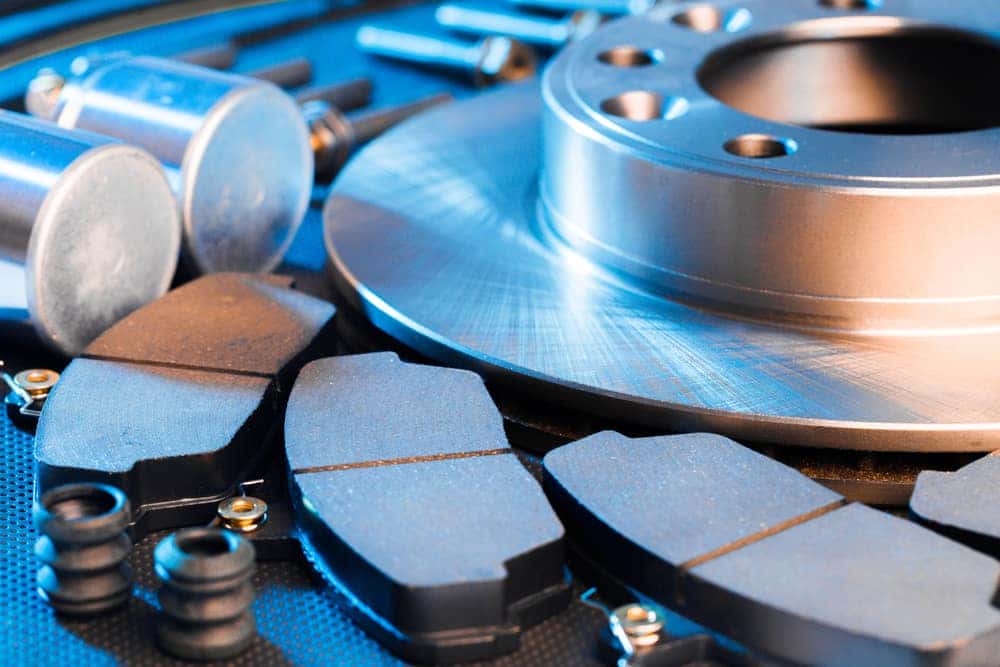
- Brake pads, the parts that squeeze the wheels to stop them from turning, which are very powerful clamps
- Brake rotors are welded permanently to the wheels.
The braking process causes a lot of friction that stops the wheels from turning. This friction causes the brake pads to wear down over time.
Which part of a vehicle’s brakes are replaced when they wear out?
The brake pads are the parts most often replaced because they are the ones that wear out the fastest.
What types of car brakes are there?
There are four different types of brakes for vehicles.
1. Disc Brakes
Disc brakes are the most common type of brakes on vehicles. They’re also the most efficient when it comes to applying braking power. In general, the front brakes wear out faster than the rear brakes.
2. Anti-Lock Brakes
Anti-lock brakes prevent wheels from locking during a skid. They engage automatically with your vehicle’s computer, usually when you hit the brakes hard during a skid or when hydroplaning.
3. Emergency Brakes
Emergency brakes are different from the ordinary brakes, or service brakes, found on your vehicle. Also called the parking brake, it’s best to set the emergency brake when your vehicle’s engine is off. This brake prevents your car from rolling in the event that it slips out of gear accidentally.
4. Drum Brakes
Some modern vehicles still use drum brakes for the rear wheels. They are less complex, last longer, and cost less to produce. But they don’t need to be as good at stopping the rear wheels compared to the front wheels. Disc brakes are still the way to go when you want your vehicle’s brakes to work properly.
How often should I replace my vehicle’s brakes?
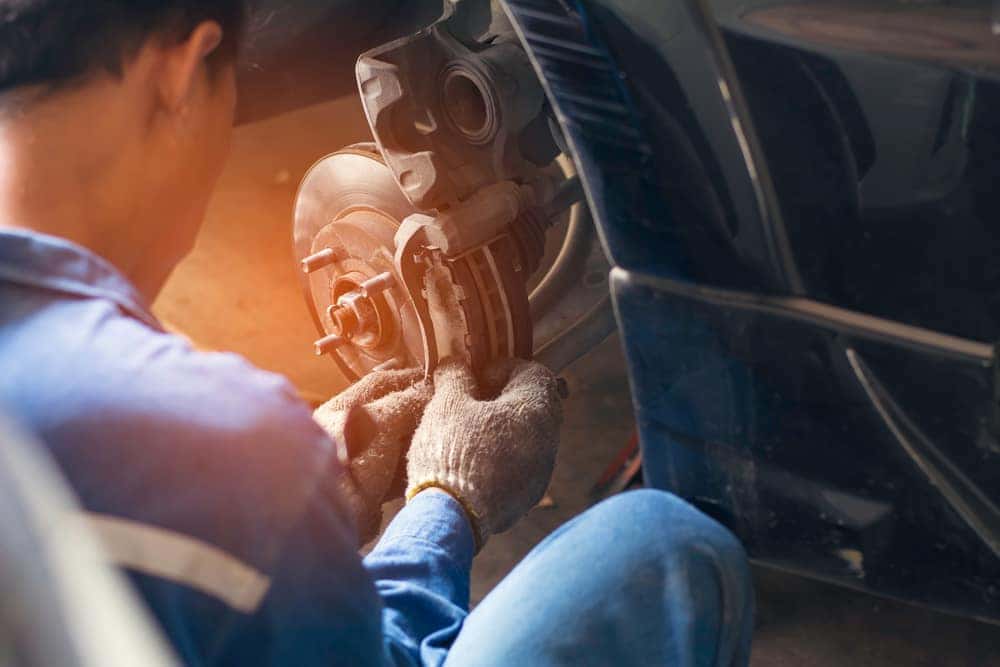
In general, brake pads are replaced approximately every 50,000 miles. You might need to get them replaced more often, depending on your driving habits, brake material, and the manufacturer’s recommendations. Regular brake inspections at service intervals, usually every 5,000 to 10,000 miles, can mitigate brake wear and give us an opportunity to tell you when your brakes should be replaced.
Rotors last much later, sometimes as much as 70,000 miles. Again, we’ll recommend when to replace the rotors based on wear patterns.Many manufacturers recommend replacing the brake fluid in your brakes every 30,000 miles. We can recommend when this should happen based on your situation.
What are some signs I need brake service?
Pay attention to these signs that your vehicle’s brakes need to be checked by a trained technician. Because brakes are vital for vehicle safety, any issues with the brakes must be addressed ASAP.
1. A change in the resistance of the brake pedal
Does it take less pressure to depress the brake pedal? Does the brake pedal move more easily? It might indicate a leak of brake fluid or air in a brake line.
2. An increase in stopping distance
Do you notice it takes a longer distance for you to stop? For example, you begin stopping ahead of an intersection the same you always do, but the front end of your car accidentally comes close to other vehicles or sticks out into an intersection.
3. Abnormal sounds when you hit the brakes
Do you notice squeaking, grinding, or thudding noises when you engage the brakes? Get your brakes checked ASAP.
4. Leaking brake fluid
Look for a small puddle of yellowish-brown fluid underneath your car or near the wheels. It might be leaking brake fluid, which is a big problem.
5. Vibrations when you hit the brakes
Can you sense vibrations when you depress the brake pedal? It might also feel like several pulses, as if the brakes engage then release, engage then release, engage then release.
6. Burning rubber smell
You never want to smell something burning in relation to your car. Burning rubber, in this case, isn’t about the tires. Burning rubber could indicate failing brakes because the brakes are so worn they cannot produce enough friction to stop the wheels.
7. Drifting to the left or right when you slow down
If your vehicle drifts to the left or right when you hit the brakes without turning the steering wheel, it might indicate that one set of brakes is pulling more than the other, causing the front of your vehicle to drift.
What causes common brake noises?
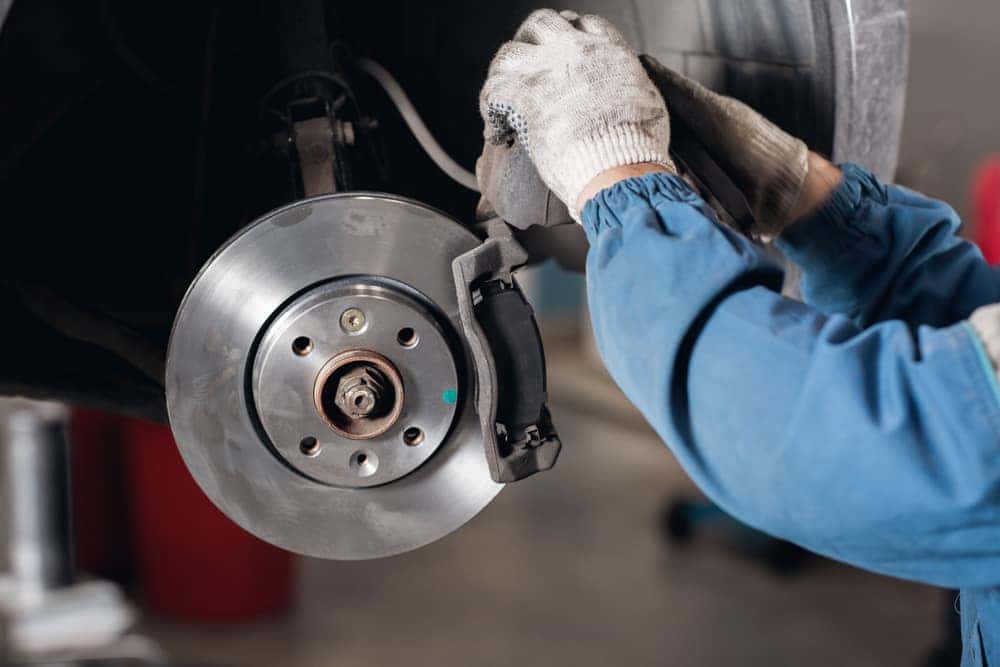
If you hear brake noises, get them looked at ASAP. There are three main types of brake noises you might notice when driving.
Identifying the Squeaking and Squealing Sounds From Brakes
Imagine hearing a high-pitched squeaking or squealing sound as you apply your brakes. Your brake pads are wearing thin, and you need them replaced within the next 100 miles of traveling. Squeaking and squealing sounds are the main signs you need new brake pads. The pads are designed to make this noise when it’s time to get new ones.
Recognizing the Grinding and Growling Sounds
Grinding and growling sounds happen when the brake pads are no longer functioning properly. If you hear a grinding or growling sound, get your brakes serviced ASAP.
Deciphering Rattling and Clicking Noises
Hear a rattle or click when you apply your brakes? This could be a sign of loose parts rattling around the brakes, either from debris that got caught behind the wheel or even a loose screw or bolt. It’s best to have this looked at because the debris could cause more problems later on. Plus, if it’s a part that came loose on your car, you need that fixed as soon as possible.
What type of maintenance will my brakes need?
There are three main types of maintenance tasks a technician can perform on your brakes.
- Replacing brake fluid to make sure it’s clean and maintains the right pressure. A technician may also replace some brake lines.
- Servicing brake pads. This might entail replacing the brake pads and then perhaps grinding the disc brakes to make sure they fit properly.
- Replacing the entire brake system. Generally, if you need the brakes replaced on one wheel, technicians will also replace the brakes on the entire axle (front or rear) because you need the brakes to pull evenly when you hit the brake pedal.
How much do new brakes cost?
Anywhere from $60 to $230 or more per axle, depending on the labor costs and how much the parts cost.
What are the differences among organic, metallic, and ceramic brakes?
Organic, metallic, and ceramic brake pads all have different materials in them. In general, organic brake pads last the least amount of time, while ceramic brake pads last the longest. There are also differences in price: ceramic brake pads last the longest.
Organic brake pads consist of a mixture of common materials like rubber, carbon, glass/fiberglass, and others mixed together with resin. These brake pads are suitable for everyday driving of non-performance vehicles and don’t produce much heat when stopping. These brake pads last around 20,000 miles.
Metallic brake pads contain 30 to 70 percent metals, such as copper, iron, steel, or other composites. A filler material like graphite helps keep the metals together in a cohesive unit. Metallic brake pads, the kinds manufacturers use the most, last around 50,000 miles.
Ceramic brake pads are made of high-quality ceramic composites that shunt heat away from the pads and rotors very effectively. Ceramic brake pads are the most expensive, but they last upwards of 70,000 miles. They’re used in high-performance vehicles.
What does brake fluid do?
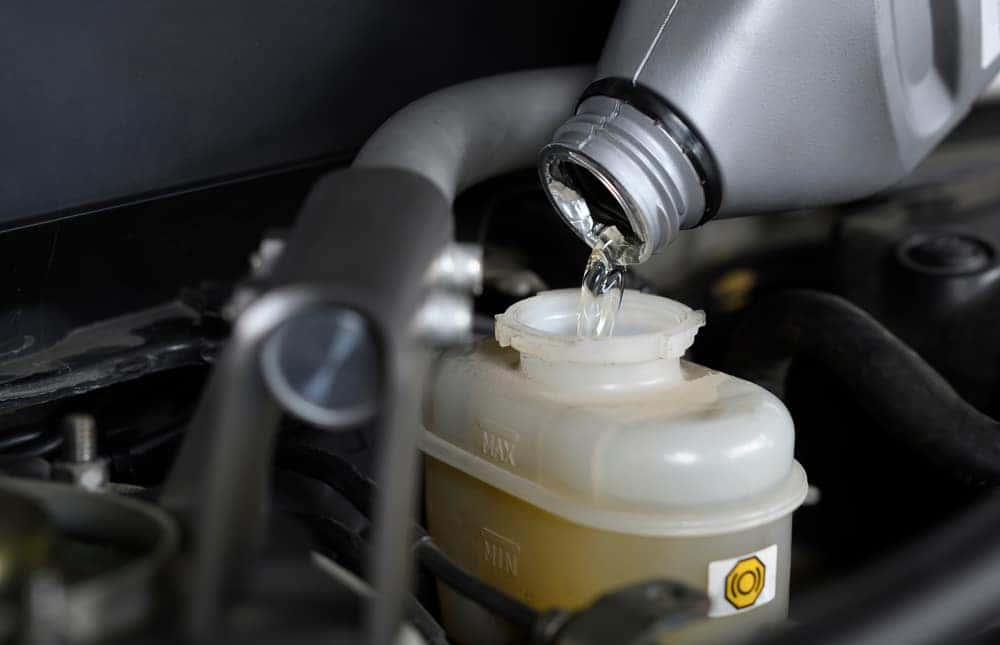
Brake fluid helps all of the components of your brake system work properly. Increases in brake fluid pressure can squeeze components while less fluid pressure releases them.
When you push down on the brake pedal, the pedal pushes a piston that compresses and increases the pressure in the brake line. This pressurizes the brake fluid, which then pressurizes the brake pads to squeeze together on the rotors. This compression results in powerful friction between the brake pads and the rotors attached to the wheels, safely slowing your vehicle to a stop.
What does brake fluid look like?
Fresh brake fluid is clear or a pale yellow color. Brake fluid that needs to be changed is a dark brown color with bits of debris in it.
How do I check my brake fluid?
First, look at your owner’s manual to see where the brake fluid reservoir is located. It’s probably on the top of the engine compartment, where you can easily access it.
- Find the brake fluid reservoir.
- Unscrew the cap.
- Check to see if the brake fluid is clean. Normal, fresh brake fluid is clear or a light yellow color. Dirty fluid is dark brown or has floating bits of debris in it.
- Check the brake fluid level. If it’s low or empty, consider bringing your vehicle in for brake service.
How do I bleed the brakes?
Bleeding the brakes is a complicated process that only seasoned professionals should handle. Here is the general process.
- Jack the vehicle on level ground with the engine off and the vehicle safely secured from rolling away.
- Have someone help you.
- Take the wheels off of your vehicle to see the rotors and calipers behind them.
- Start with one wheel before going to the others, one at a time.
- Find the four caliper bleeding screws on the first wheel.
- Loosen the bleeding screws one at a time just to make sure they are loose enough to move. This prevents air bubbles from becoming trapped in the brake lines.
- Tighten the screws again until you’re ready.
- Secure a piece of clear tubing, around ¼-inch in diameter, over the first bleeding screw.
- Put the other end in a bucket or bottle to catch extra fluid. This container must sit above the bleeder screw’s height to prevent air from moving back into the brake caliper (liquid is heavier than air, so the air will travel up the tube while the liquid goes down).
- Have your assistant pump the brake pedal several times until they feel resistance. Then, keep the pressure on the pedal.
- Open the bleeder screw a bit. Fluid will move through the tube while the brake pedal moves toward the floor of the vehicle.
- Have your helper notify you the moment the brake pedal hits the floor. Tighten the bleeder screw.
- Inspect the brake fluid level near the master cylinder once the brake pedal reaches the floor. If the level is full, it’s fine.
- Repeat this process two to five times to make sure all of the air bubbles get out of the brake fluid.
- Then, move to the next bleeder screw on this same brake caliper until that caliper is done.
- Repeat this process for the other three calipers.
- Test the brakes by applying the brake pedal.
- Watch the fluid in the master cylinder reservoir. If you still see air bubbles, you’re not quite done yet.
Again, we highly recommend a professional service team handle this process for you. If you choose to change the brake fluid on your own, it’s important to remember that it’s a complicated process. You’ll need to bleed the brakes to make sure the air gets out of the lines once you replace the fluid.
Brake fluid is toxic and can eat away your vehicle’s paint. That’s why we recommend letting professional service technicians handle changing out brake fluid or servicing your brakes. Plus, the brake system is very complicated and needs all of the parts to work together properly. Because the brakes are necessary for safety, it’s best to have professionals look them over.
Where can I get brake service in Springfield, Missouri?
Contact us or call 417-763-6811 if you have any questions about brakes or getting brake service in Springfield, Missouri. Schedule service with our team if it’s time for new brakes or your brakes are making noises.
0 comment(s) so far on How Do Brakes Work? Our Complete Guide to Brakes on Your Car