


Our Complete Guide to Car Specs Will Showcase Why These Numbers Matter

Much like shopping for the perfect jeans or shoe sizes that have various numbers associated with them for sizing and style, cars have similar specifications. Our new and used vehicles at Thompson Sales have many numbers, measurements, and terms that tell you some characteristics of the model you want. You’ll see these numbers on every listing we have on our website. Read more in our guide to vehicle specifications, which gives you all the details you need to know.
Interior Dimensions
How much space does your family need inside the cabin of a new vehicle for sale? From two rows of seating and five passengers, like a Buick model or the GMC Acadia, to three rows and up to eight passengers, like the Yukon, the interior dimensions give you an idea of how much room you and your passengers will have when going on short drives to the grocery store, weekend getaways to St. Louis or Kansas City, and summer vacations across the country.
Headroom
Headroom measures the distance from the seat cushion to the ceiling. It gives you an idea of how much head clearance your passengers will have. In general, most vehicles have a headroom of 40 inches. However, if you have someone taller, you might opt for a vehicle with more headroom than that, like a minivan, truck, or large SUV. Having a panoramic sunroof may alter the headroom by an inch or two.
Legroom
Legroom is the space between the back of the front seat and the front edge of the dashboard or the footwell in the front seats. For other rows of seating, legroom is measured to the back of the seat in front of it. Legroom gives you an idea of how comfortably someone can stretch their legs and how much space is available for tall drivers or passengers.
The legroom for front seats can change because the driver and passenger seats can move back and forth. Again, if you have tall family members, a larger truck or SUV might work better.
Legroom in the front seats averages around 40 to 42 inches. The second row of seating may have between 36 and 39 inches, while the third-row seats typically have 35 to 36 inches of legroom.
Shoulder Room
The shoulder room measures how much your passengers might be scrunched together across a row of seats. This number usually runs about 55 to 60 inches across, and it’s the width of the cabin from door to door across a row of seats. Most passengers feel comfortable with at least 50 to 52 inches of shoulder room, while 56 inches fosters better long-distance drives. Smaller cars have less shoulder room.
Hip Room
The hip room measures the space between the sides of the seats, measured at seat level. The total hip room of a vehicle usually gets between 50 and 55 inches, and it gives you an idea of how comfortable the seats will be.
Cargo Volume
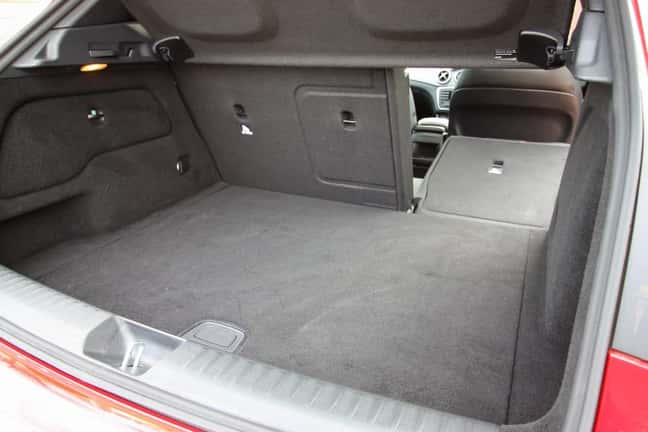
Do you favor passengers or cargo from your new vehicle for sale? If you want to take more gear with you on long drives or love shopping trips, the cargo volume tells you how much space is available in the cabin. Cargo volume is measured in cubic feet, which is the height times the length times the width of the inside of the cabin.
For two-row SUVs, there are two cargo volume numbers. Larger, three-row SUVs have three numbers for cargo volume because you can flatten the third and second rows to maximize your cargo space. Compact SUVs can have between 10 to 15 cubic feet of cargo volume behind the second row. Larger SUVs can get between 20 to 30 cubic feet behind the back row. Keep in mind that full-size SUVs have three rows of seating.
Cars usually measure the cargo volume for the trunk. A trunk typically has between 10 to 15 cubic feet of cargo space. The average size of a piece of luggage is around 5 cubic feet. However, a carry-on bag might be around 3 cubic feet.
Passenger Volume
The passenger volume refers to the total amount of space available in the cabin. It combines the space, measured in cubic feet, for the front and rear passengers. A larger passenger volume means you’ll get more room for your family.
Exterior Dimensions
Will your vehicle fit into your garage? Is it small enough to navigate narrow streets or small parking spots? The exterior dimensions of your vehicle will tell you how big it is. If you’re buying a large SUV, consider measuring your garage before buying your next new vehicle.
Overall Length
The total length of the vehicle goes from the frontmost point (e.g., bumper) to the rear point (e.g., bumper or spare tire). This measurement indicates how long the vehicle is, which can affect parking, maneuverability, and available interior space.
Overall Width
This is the widest point of the vehicle, excluding side mirrors unless otherwise stated. The width affects how much space the vehicle takes up in a lane or parking spot. Wider vehicles may feel more spacious inside but could be harder to maneuver in tight spaces.
Overall Height
The height of the vehicle from the ground to the highest point (e.g., roof or roof rails, if included). The height of a vehicle impacts headroom, cargo space, and aerodynamics. Taller vehicles may be harder to park in low-clearance areas or in parking garages.
Wheelbase
The wheelbase is the distance between the centers of the front and rear wheels. The wheelbase affects ride comfort, stability, and handling. Longer wheelbases generally provide smoother rides, while shorter wheelbases improve maneuverability and handling.
Track Width (Front and Rear)
The track width measures the distance between the centers of the tires on the same axle (measured at the front and rear axles). A wider track width improves stability and handling, particularly during cornering.
Ground Clearance
The ground clearance measures the distance between the lowest point of the vehicle (usually undercarriage) and the ground. A higher ground clearance can mean better off-roading performance and uneven terrain. However, vehicles with a higher ground clearance may be less stable at high speeds.
Approach Angle
The approach angle is the maximum angle at which the vehicle can climb or approach a steep incline without hitting the front bumper. It’s important for off-road performance, determining how well a vehicle can navigate uneven terrain.
Departure Angle
The departure angle is the maximum angle at which a vehicle can descend or move away from a steep incline without the rear bumper hitting the ground. This measurement affects the vehicle’s off-road capabilities and ability to clear obstacles when exiting slopes.
Breakover Angle
Knowing the breakover angle showcases the maximum angle at which a vehicle can pass over a peak or obstacle without the undercarriage scraping. This specification is relevant for off-road vehicles, showcasing their ability to handle rugged terrain.
Curb Weight
The curb weight measures the total weight of the vehicle with all standard equipment and fluids but without passengers or cargo. The curb weight affects fuel efficiency, handling, and performance. Lighter vehicles tend to be more fuel-efficient, while heavier vehicles may feel more stable.
Turning Radius (or Turning Circle)
Knowing the turning radius lets you know the smallest circular turn the vehicle can make, typically measured curb-to-curb. This measurement shows you a vehicle’s maneuverability. A smaller turning radius is better for tight spaces and city driving.
Overhangs (Front and Rear)
Understanding the overhang gives you an idea of how much your vehicle can handle off-roading. Overhangs measure the distances from the center of the front and rear wheels to the front and rear ends of the vehicle, respectively. Longer overhangs may limit off-road capabilities, while shorter overhangs improve clearance and approach/departure angles.
Engine Specs
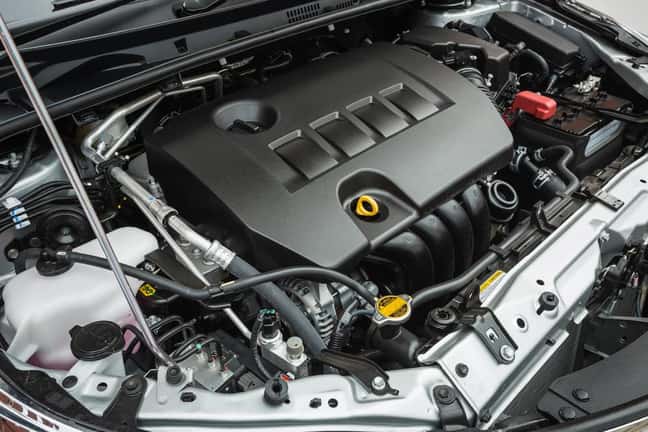
Do you favor a more powerful engine or fuel efficiency with a new vehicle for sale? We explain what the most common engine specs mean:
Engine Displacement
You’ll see something like 2.5L or 6.2L when measuring an engine’s size. This is the engine displacement, or the total volume of all the cylinders in an engine, typically measured in liters (L) or cubic centimeters (cc).
A larger displacement often means more power, as the engine can combust more air and fuel. It may also consume more fuel. However, turbocharged or supercharged engines can improve fuel efficiency without sacrificing power.
Number of Cylinders
Cylinders in the engine provide the power that creates forward motion. You’ll see cylinder counts from 3 to 12 in vehicle engines, although the most common types top out at eight, as in a V8 engine.
More cylinders usually mean smoother performance, more power, and a larger engine. Fewer cylinders improve fuel efficiency and reduce weight.
Cylinder Configuration
The way the cylinders are arranged are described in a few ways, such as inline (I), V-shape (V), flat/boxer (H), or W-shape. The cylinder configuration affects engine size, smoothness, and center of gravity. For example, inline engines are compact, while V-shaped engines are often more powerful.
Horsepower (HP)
Horsepower measures the engine’s power output. This specification indicates the vehicle’s ability to perform tasks such as accelerating or towing. Higher horsepower means faster acceleration and greater capability.
Torque
Think of torque as a twisting force. Torque in an engine measures the engine’s rotational force, typically measured in pound-feet (lb-ft). Critical for tasks requiring strength, like towing or hauling, need torque in the engine. This force influences how quickly the vehicle accelerates from a stop.
Compression Ratio
The compression ratio measures a cylinder’s maximum volume to its minimum volume during a compression stroke in the combustion chamber. Higher compression ratios can improve efficiency and power but may require premium fuel to avoid knocking.
Fuel Type
Knowing the type of fuel the engine uses lets you budget for fuel costs. You could find a gasoline, diesel, hybrid, or electric engine. The type of fuel affects performance, efficiency, and environmental impact. Diesel engines, for example, often provide more torque, while gasoline engines are generally more responsive.
Turbocharged or Supercharged Engines
Turbochargers and superchargers are devices that force more air into the engine to improve power output in the combustion chamber. Turbocharged engines are more fuel-efficient and provide extra power when needed when compared to non-turbo engines of the same size.
Turbochargers help automakers create smaller engines and save vehicle weight. Vehicles with one turbocharger typically max out at 3.0L of displacement. Twin-turbo engines with two turbochargers usually go from 3.0L to 6.0L of displacement.
Superchargers deliver immediate power boosts.
Valvetrain Configuration
The valvetrain refers to the number and arrangement of valves per cylinder, such as DOHC, SOHC, and OHV. The valvetrain configuration affects the engine’s efficiency, power, and smoothness.
- DOHC: Dual Overhead Camshaft, with two camshafts per bank of cylinders.
- SOHC: Single Overhead Camshaft, with one camshaft per bank.
- OHV: Overhead Valve, one camshaft within the engine block.
Engine Type
The engine type defines whether the engine is naturally aspirated or has forced induction, such as turbocharged or supercharged. Naturally aspirated engines are simpler and may be more reliable, while forced induction provides higher performance at the expense of complexity.
Redline
The redline shows the maximum engine speed (in RPM) before potential damage occurs, shown on the tachometer next to the speedometer on the dashboard. A higher redline generally means the engine performs more aggressively, particularly in high-performance engines.
Bore and Stroke
The bore is the diameter of the cylinder, while the stroke is the distance the piston travels within the cylinder. Short-stroke engines rev higher for more speed, while long-stroke engines produce more torque.
Miles Per Gallon (MPG)
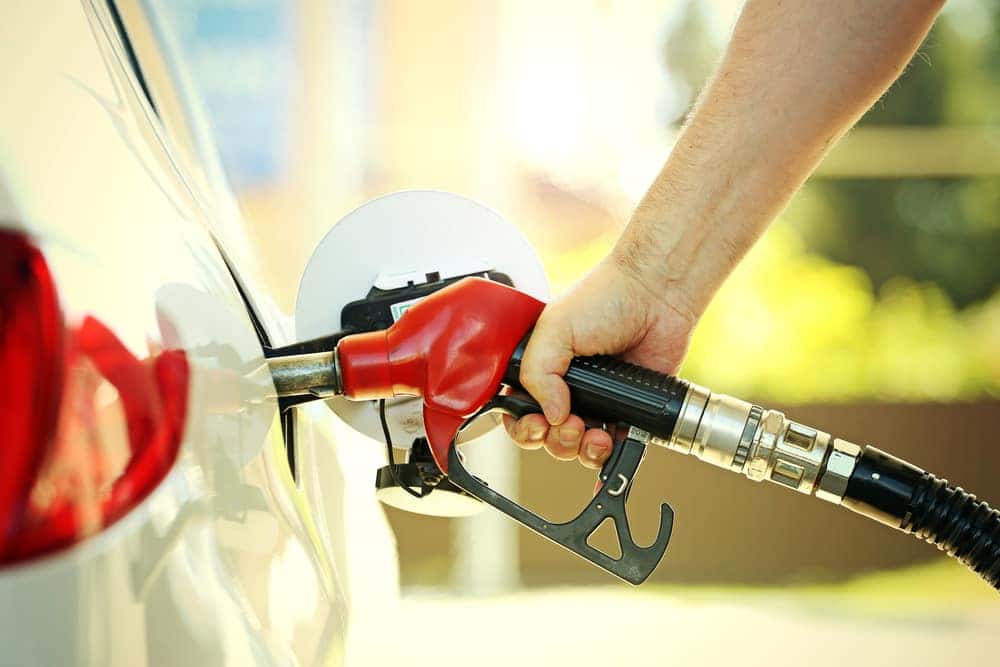
MPG measures a vehicle’s fuel efficiency, or how far a vehicle can travel on one gallon of fuel. Divide the miles driven by the gallons of fuel consumed to get your actual miles per gallon. The EPA estimates the fuel economy numbers of every vehicle on American roads.
MPG has three figures, city, highway, and combined ratings, reflecting variations in driving conditions. City driving typically yields lower MPG due to frequent stops and slower speeds, while highway driving often results in higher MPG due to consistent speeds and reduced idling. However, this is flipped for hybrid powertrains, where electric motors are more efficient at speeds of 40 mph or less before the internal combustion engine seamlessly takes over.
Vehicles with higher MPG consume less fuel, leading to lower fuel expenses over time. This is particularly important for individuals with long commutes or businesses with fleets of vehicles. Additionally, improved fuel efficiency reduces greenhouse gas emissions and reliance on fossil fuels, contributing to global efforts to combat climate change. Hybrid and electric vehicles are particularly noteworthy for their high MPG or equivalent efficiency ratings (MPGe), which align with eco-friendly goals and give you even greater fuel savings.
If you want a more powerful engine, they typically have lower fuel efficiency ratings (but not always). Diesel engines usually have greater fuel efficiency per weight of fuel consumed.
Drivetrain
Drivetrains determine how a vehicle’s engine power is distributed to the wheels, which can determine performance, efficiency, and capability. The three primary types are 2-wheel drive (2WD), 4-wheel drive (4WD), and all-wheel drive (AWD), each suited to specific driving conditions and needs.
2WD
A 2WD drivetrain sends power to either the front wheels (FWD) or rear wheels (RWD). FWD is common in sedans and compact cars, offering better fuel efficiency and handling in ordinary conditions. Meanwhile, RWD, often used in sports cars and trucks, provides enhanced performance and towing capabilities.
4WD
4WD is designed for off-road and rugged terrains, enabling power delivery to all four wheels simultaneously or selectively. It typically includes a low-range gear setting for navigating challenging surfaces like mud, snow, or steep inclines. 4WD systems are most commonly found in trucks and SUVs intended for heavy-duty use. While highly capable, 4WD can decrease fuel efficiency due to the additional weight and mechanical complexity of the system. Many modern vehicles with 4WD allow drivers to select various drive modes for optimal performance.
AWD
AWD continuously distributes power to all four wheels, adapting to changing road conditions automatically. It is ideal for diverse environments, offering superior traction in rain, snow, or on slippery surfaces. AWD is commonly used in crossovers and luxury vehicles, combining the comfort of 2WD with added safety. It strikes a balance between capability and convenience, making it popular for everyday drivers. AWD often involves precision computer control.
Thompson Sales has hundreds of 4WD or AWD vehicles on our lot at any given time, from GMC Sierra HD and Sierra 1500 to the GMC Yukon or Acadia models. Advanced powertrains are standard in some models and options in others.
EV Specs
EVs have a different set of specifications compared to gasoline-powered models. Rather than fuel efficiency, they measure how much range an electric vehicle can go, although you can see some specs about the efficiency of an EV.
Range
Range is the distance an EV can travel on a fully charged battery, usually measured in miles, just like with a gasoline-powered model. However, the range is more significant for EVs versus gasoline-powered models because there are fewer charging stations.
Typical ranges vary widely, from around 150 miles for some entry-level EVs to over 400 miles for premium models. Various factors can influence the range. Extreme heat and cold can reduce the range because the ambient temperature changes the battery’s efficiency but also because you use the heat or AC more, which drains the EV battery faster. Towing, which requires more power, also drains the battery faster.
Battery Size (Capacity)
Measured in kilowatt-hours (kWh), this indicates the total energy storage capacity of the battery. Larger batteries generally provide longer ranges but may increase the vehicle’s cost and weight. Common battery sizes range from 30 kWh for compact EVs to 100 kWh or more for high-performance or luxury EVs.
Charging Times
This tells you the time required to recharge the battery, varying by charger type and battery size.
- Level 1 (120V): Standard household outlet, adding ~3-5 miles of range per hour. It may take 24 to 48 hours to fully charge an EV this way.
- Level 2 (240V): Dedicated home or public chargers, adding ~20-50 miles of range per hour. This means you could fully charge your EV overnight while you sleep. You’ll need a professional electrician to install a Level 2 charging box in your garage. You can also find these at some public charging stations.
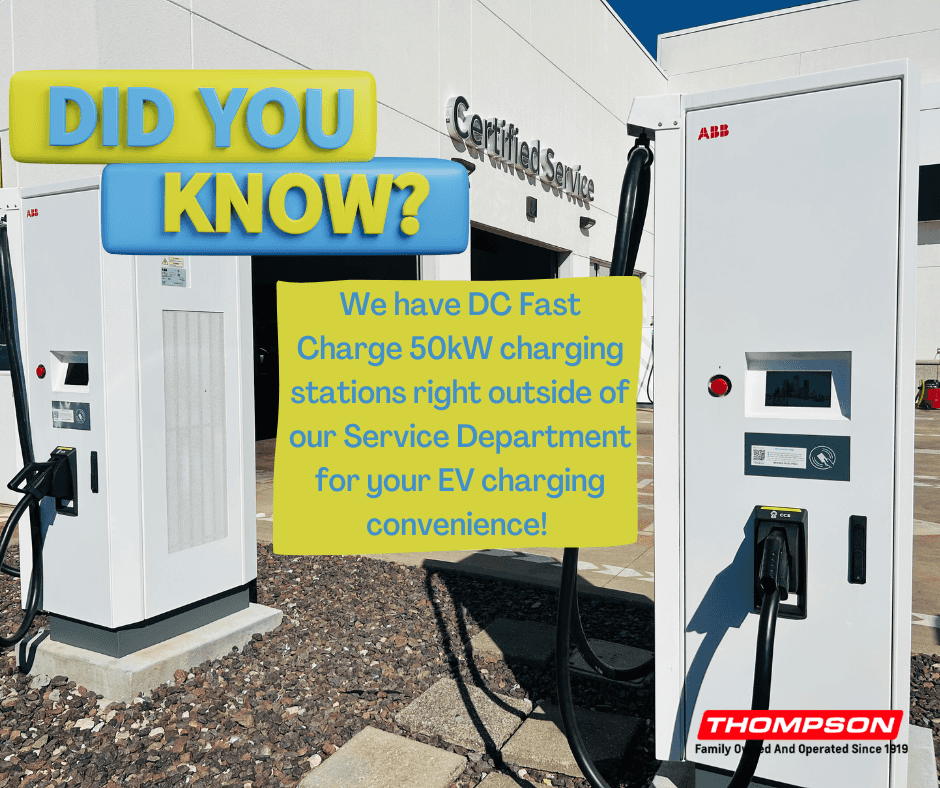
- Level 3 (DC Fast Charging): High-powered public chargers, adding 80% charge in 20-40 minutes for most EVs. These are great when traveling and are often found along major routes and highways in the United States.
Efficiency (Miles Per kWh)
This specification highlights the distance an EV can travel per kilowatt-hour of battery energy, akin to miles per gallon (MPG) for gas vehicles. Higher efficiency means lower operating costs and less frequent charging. Typical efficiency ratings range from 3-5 miles per kWh.
Power Output and Performance
Motor output, often measured in horsepower (hp) or kilowatts (kW), determines acceleration and towing capacity. This is similar to gasoline-powered models with horsepower ratings.
Test-Drive a New Vehicle for Sale in Springfield, MO
Have you found a new vehicle for sale that meets your needs? Contact us or call (417) 763-6811 to schedule a test drive with our team. We’re happy to help in any way we can.
0 comment(s) so far on Our Complete Guide to Car Specs Will Showcase Why These Numbers Matter