


Our Guide for Car Battery Service for Used Cars & Trucks in Missouri
The staff at Thompson Sales wants you to have the best experience with your new or used vehicle as soon as you drive it off our lot. That’s why we have a world-class service department ready to maintain or repair your vehicle, whether your car needs a routine check-up, tire rotation, or a full tune-up.
Please read our complete guide to battery service for used cars and trucks in Missouri from the team at Thompson Sales.
How does a car battery work?
Your vehicle’s battery converts chemical energy into electricity using plates of lead and other metals. These metal plates are immersed in a solution comprising one-third sulfuric acid and two-thirds water. This results in ions, or charged particles, moving to and from the liquid and the metal. The ions create enough electricity to start your vehicle and run electrical components for a short period of time.

What does a car battery do?
The main purpose of your vehicle’s battery is to start the car using around 12.6 volts of electricity.
How long can I run my used car or truck’s components using just the battery?
Usually around two hours, but this is not recommended.
How long does my car battery last without needing to be recharged from the alternator?
If you don’t start your car for a while, your battery can go for about two weeks without needing a recharge from the alternator. You might need a jumpstart if you don’t start your car over a two-week period.

How does my car battery recharge?
The alternator serves as an electricity generator for your car. The serpentine belt turns the mechanism inside the alternator that generates electricity. Wires then take the electricity to the battery where it continuously recharges while your engine runs, even when your car idles at a traffic light. Without the alternator, the electrical components in your car would stop running after a couple of hours because they drain the battery.
How do I know if I need to replace my used car or truck’s battery?
There are seven signs you might need a new battery installed in your vehicle, in order from the most common to the less obvious.
- Dim lights and electrical issues. Your dashboard lights, overhead lights, and even headlights might look dimmer because your battery is slowly losing its charge.
- Engine starts slowly. If you have trouble starting your car, and it takes a few extra seconds to start the engine, your battery is almost completely out of the charge it needs to start the vehicle.
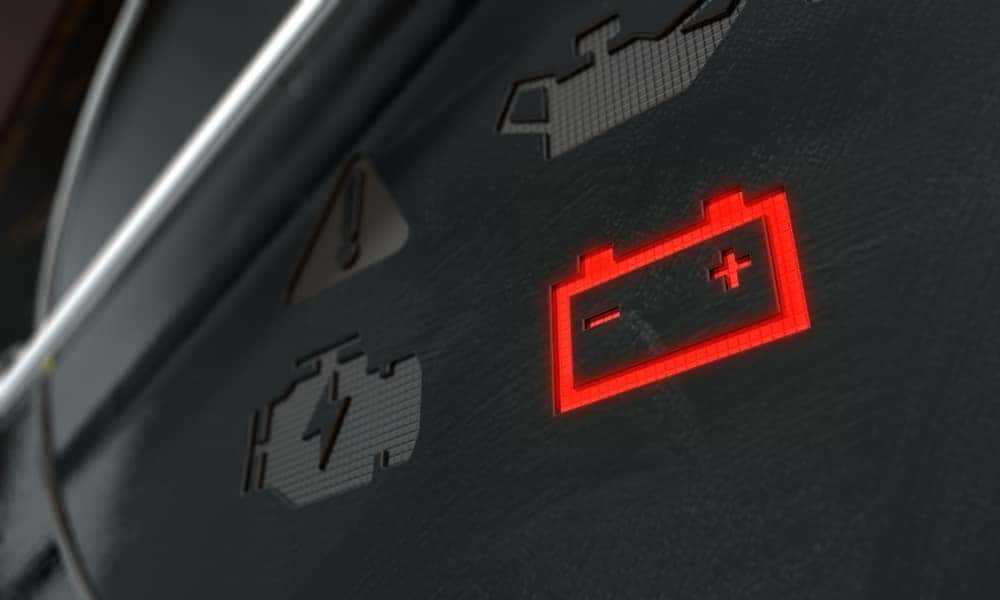
- Check engine OR battery light is on. Your dashboard indicators may show the check engine or battery light aglow. If this happens, take your vehicle in for service.
- Old battery. Vehicle batteries typically last three to five years. If you’ve had yours for about this long, it’s time to replace it before it can no longer start your car.
- Bad smell. Your car battery might leak small amounts of the acid solution. You’ll smell it if you lift up the hood.
- Corroded metal connectors. Do you see a white or whitish-gray substance on the metal connectors of your battery? If so, your car battery is leaking and you need to replace it ASAP.
- Misshapen battery case. Extreme heat or cold can cause your car battery’s case to lose its shape because it might swell or crack even though the case is sturdy and thick. Replace your battery ASAP if it looks like it’s in any shape other than a rectangle.
How long does my car battery last?
Typical batteries last anywhere from three to five years.
What affects the longevity of my used car or truck’s battery?
Several things may shorten or lengthen the life of your battery, including:
- Brand
- Vehicle Type
- Climate
- Car care and maintenance
- Driving patterns

How does a technician know if my used car or truck needs a new battery?
First, a service technician looks at the battery to see if there is any corrosion or leakage. The technician will clean any corrosive build-up to make sure the multimeter, a handheld device that measures the charge coming from an electrical component, works properly.
Second, the technician will set the multimeter to the right voltage.
Third, the surface charge of the battery must be eliminated for an accurate reading. The easiest way to do this comes from turning on the headlights for two minutes.
Fourth, the technician places the ends of each of the multimeter’s probes, tipped with metal, on the positive and negative terminals of the car battery. The terminals are usually shown as red and black for positive and negative.
Then the technician looks at the resting reading on the multimeter. A normal battery will have a charge of between 12.2 and 12.6 volts. The battery is fully charged at 12.6 volts. Any reading below 12.2 volts means the battery isn’t holding enough electrical current to start your car’s engine.
Now the tech examines the crank voltage with the multimeter. Once the car starts, the voltage will drop slightly as the ignition draws power from the battery. This reading should not go below 10 volts. Once the car starts, the voltage should read from 14 to 14.5 on the multimeter. Any reading lower than this means either your car battery is weak or the alternator isn’t sending enough electricity to the battery.
To test the alternator, a technician will turn on all of your vehicle’s electrical equipment to maximize the load on the battery while the engine is running. If this reading drops below 13.5 volts, your alternator may need to be replaced.
How do I know if the problem is an alternator and not the car battery in my used car or truck?
A technician will test your car battery and alternator with a multimeter to determine the cause of your car’s electrical problem if there isn’t enough electricity to run the systems.
If your used car or truck starts and then immediately stalls, the electrical problem might stem from the alternator rather than the battery.
What is a maintenance-free battery?
When you purchase a maintenance-free battery, that means you don’t have to monitor fluid levels in the battery. Maintenance-free types are completely sealed, but you still have to monitor the batteries every once in a while by looking at the terminals. We recommend having a technician check your battery once every six months.
What are the best brands of car batteries?
Three major companies manufacture a large majority of the car batteries in the United States, according to Consumer Reports. ACDelco batteries are for sale through GM service centers and dealerships like Thompson Sales.
Other popular brands include:
- AutoCraft
- Bosch
- DieHard
- Duracell
- Duralast
- EverStart
- Interstate
- NAPA
- Optima
- Super Start
How do you dispose of a car battery?
You must bring a car battery to an authorized hazardous waste disposal center or a car service center. Those places will ship the used batteries to a manufacturer that takes apart the battery and disposes of the contents properly without contaminating landfills or groundwater.
How much does a new car battery cost for a used car or truck?
Expect to pay anywhere from $45 to $250 for a new battery for your vehicle. Prices vary depending on the size, features, and whether or not the battery is a premium versus a regular one.
Where can I get battery service for my used car or truck in Springfield, Missouri?
Thompson Sales offers battery replacement and alternator replacement services for all makes and models of vehicles. Contact us for a service appointment or call (417) 763-6811 for more information.
0 comment(s) so far on Our Guide for Car Battery Service for Used Cars & Trucks in Missouri