


7 of the Top Advanced Safety Features in Used Vehicles
You have a list of the top features you want when shopping for a quality used vehicle. Advanced safety features should be at the top of your list. Some of these items you see on new vehicles today have been around since 2017 and are required safety features now.
Read our guide to the top seven advanced safety features you’ll find in used vehicles for sale on our lot in southeast Springfield.
Evolution of Vehicle Safety
Before we get into the advanced features you see on quality used vehicles, we’ll take a brief look at the history of vehicle safety over the past century of cars on American roads.
Seat Belts
Federal law mandated seat belts to be in all new vehicles starting in 1966. Before then, seat belts were offered as options for cars, starting with Nash Motors Company in 1949, even though they had been invented in the 1880s.
Air Bags
Air bags were invented in the 1950s. Frontal airbags, designed to prevent severe injuries in a front-end crash, were not standard equipment on vehicles until 1987. The National Highway Traffic Safety Administration (NHTSA) says that airbags have saved over 50,000 lives.
Electronic Stability Control
Required on all new cars since 2011, electronic stability control is designed to reduce spin-outs and blow-outs when the tires lose their grip on the road. Electronic stability control uses automatic, computer-controlled braking of the wheels to help you maintain control of your vehicle.
There have been many more advanced safety features that have come out in the past 10 years, which is where we begin our look at seven of the best of them.
1. Backup Cameras
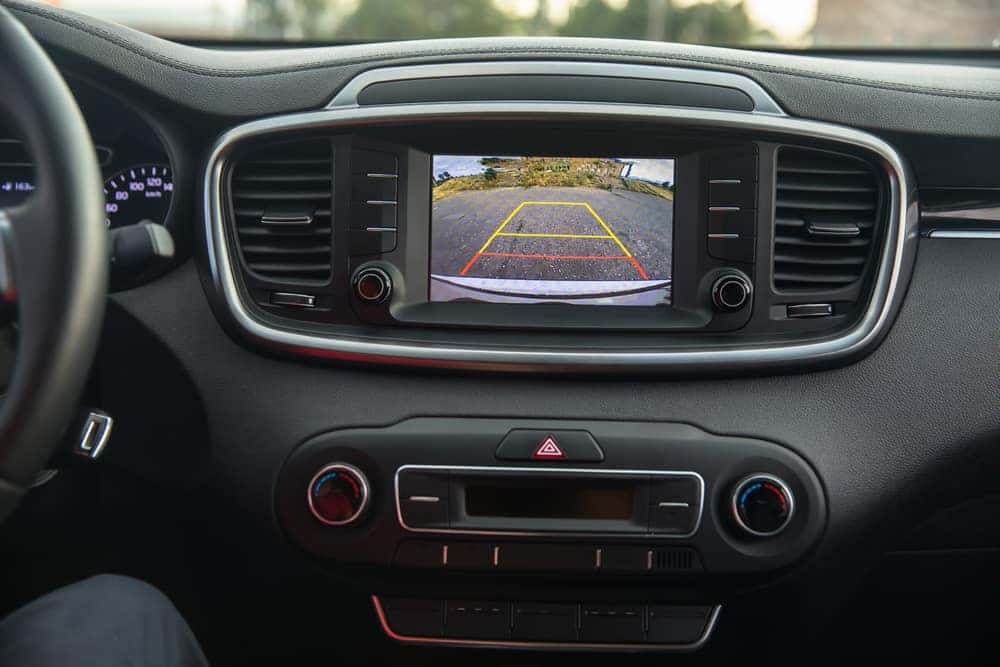
Backup cameras provide drivers with a clear, real-time view of the area behind their car, truck, or SUV. As soon as a driver shifts into reverse, the backup camera activates, displaying an image on a dashboard screen. The goal is to give the driver a complete view behind the vehicle with a lower view and even views to the right or left to avoid a collision.
Drivers can avoid obstacles that might be difficult to see from the rearview mirror or side mirrors, including low objects, pedestrians, and even other vehicles in crowded parking lots. A backup camera reduces the likelihood of accidents when backing up from a parking spot.
Many backup camera systems include dynamic guidelines that adjust based on the vehicle’s angle, helping drivers judge the path of their car accurately. You might find it easier to park, exit narrow spaces, and avoid unintended collisions.
Studies have linked these cameras to a significant decrease in “backover” accidents by as much as 17%, particularly in areas with high pedestrian traffic. Backup cameras were an optional feature on some vehicles in 2009. They became a mandatory feature on new cars in 2018.
Now, many cars have 360-degree cameras that give you a complete view of the surrounding area close to the vehicle.
2. Sensors & Cameras That Detect Objects
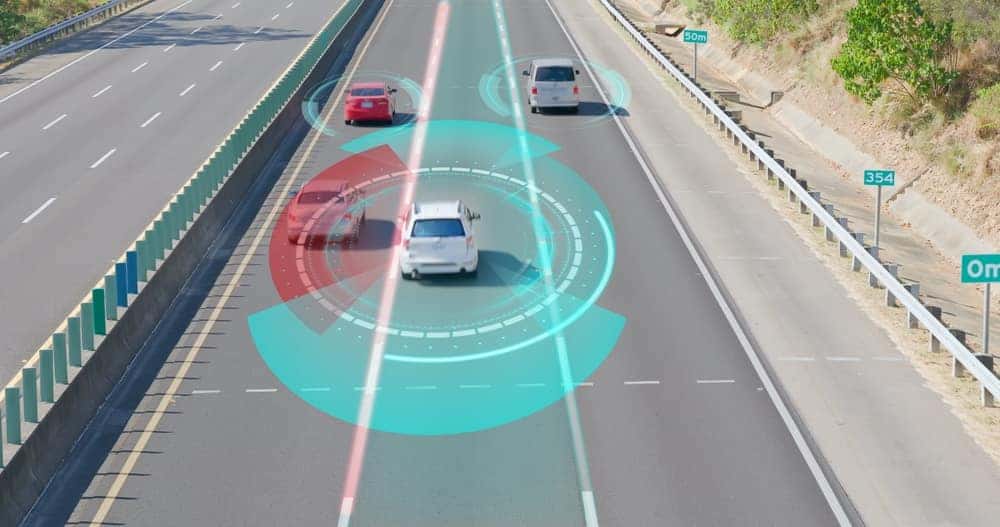
Sensors and cameras that detect objects around a vehicle have become essential components of modern driving safety. These systems continuously monitor the car’s surroundings, identifying nearby objects, pedestrians, or other vehicles in real-time. Look for used vehicles for sale with these features when shopping for top-of-the-line cars, trucks, or SUVs on a budget.
The key is that sensors and cameras are positioned strategically around the car to provide a comprehensive view. These cameras and sensors send alerts to the driver when they detect a potential hazard. This technology reduces the likelihood of collisions, especially in crowded urban areas or during tricky maneuvers like parking.
For example, a blind-spot detection system will sound an auditory alert in the cabin if a vehicle enters the blind spot zone when the vehicle has a turn signal on or starts to drift into oncoming traffic. A visual alert might appear on the dashboard or on the side-view mirror to also warn the driver.
In addition to visual feedback, these sensors can often work with the car’s braking and steering systems, automatically adjusting to prevent accidents. For example, if a vehicle or pedestrian is too close, the system can trigger automatic emergency braking or lane correction to avoid the collision if the driver doesn’t act in time.
The impact of these object-detection systems on driver safety is significant. These advanced safety features in used vehicles can reduce side-swipe and rear-end collisions. Drivers receive timely information and assistance that can prevent minor incidents and major accidents.
These systems use sensors and cameras on some of our used vehicles for sale:
Automatic emergency braking (AEB) detects potential collisions and applies brakes if the driver doesn’t respond in time.
Lane departure warning (LDW) and lane keeping assist (LKA) warn drivers if they’re unintentionally drifting out of their lane, and some systems can even steer the car back into place.
Blind spot detection (BSD) monitors the vehicle’s blind spots and provides alerts if there’s another vehicle in them.
Adaptive cruise control (ACC) adjusts vehicle speed to maintain a safe following distance from the car ahead.
Rear cross-traffic alert (RCTA) warns of oncoming traffic when reversing, which is especially useful in parking lots.
Traffic sign recognition (TSR) uses cameras to detect and display important road signs, like speed limits, directly on the dashboard. Drivers can get alerts if they go over the speed limit.
Pedestrian and cyclist detection expands on AEB to detect pedestrians or cyclists and initiate braking to avoid collisions.
3. LiDAR
LiDAR (Light Detection and Ranging) technology is an advanced safety feature that uses laser sensors to create a highly detailed 3-D map of a vehicle’s surroundings. LiDAR emits lasers surrounding the vehicle, and its sensors detect the precise distance, shape, and position of objects around the car. This real-time mapping enables the vehicle to “see” with incredible accuracy, even in low-light or adverse weather conditions, making it a powerful tool for collision avoidance.
LiDAR is a feature found on vehicles with SuperCruise technology, including higher trims of these models, some of which you might find among our certified pre-owned inventory:
- 2024 GMC Acadia
- 2024 GMC Sierra 1500
- 2024 GMC Yukon & Yukon XL
- Hummer EV SUV
LiDAR data gives precise and accurate information to the vehicle’s onboard systems, which use the information to adjust speed, braking, and steering as needed. For instance, if the LiDAR detects an unexpected object in the car’s path, it can trigger automatic emergency braking before the driver even reacts. LiDAR offers a unique blend of precision and adaptability that strengthens a vehicle’s overall safety because it operates in all lighting conditions.
LiDAR systems continue to get more advanced and are less expensive to produce. Its detailed environmental awareness is invaluable in navigating complex driving situations, from busy intersections to winding roads. LiDAR is paving the way toward safer, more intelligent navigation, particularly as semi-autonomous and autonomous driving systems are becoming closer to reality.
4. Adaptive Headlights
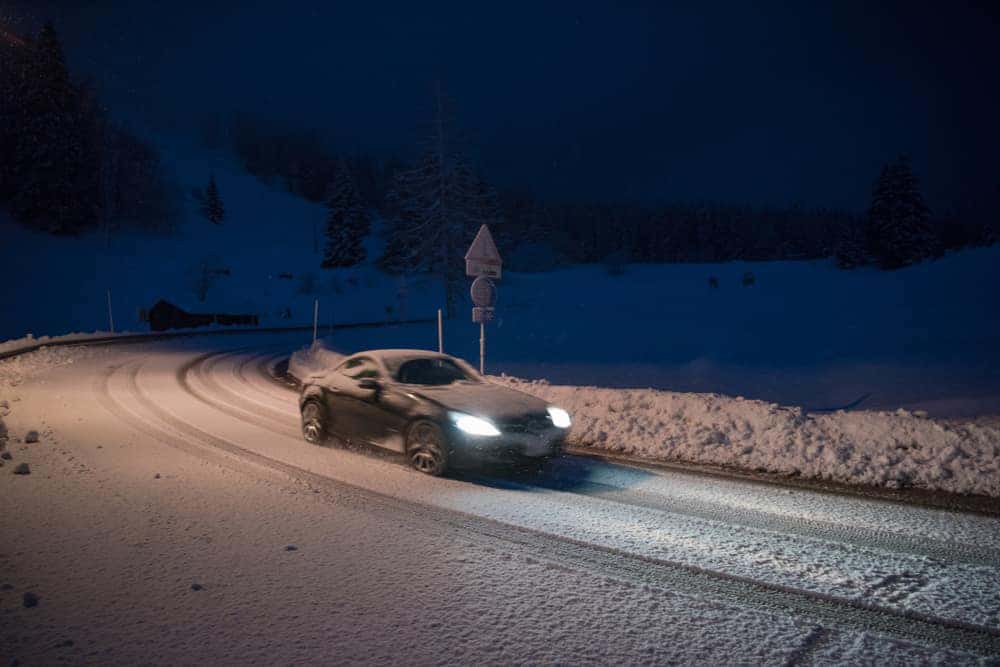
Adaptive headlights enhance visibility at night by adjusting the direction and range of a vehicle’s headlights based on driving conditions. Unlike traditional headlights, which remain fixed, adaptive headlights pivot in response to the steering wheel’s movements. When a driver turns the wheel, the headlights follow, illuminating the road ahead around curves and corners. The additional visibility allows drivers to see obstacles, pedestrians, or wildlife sooner, especially on winding or poorly lit roads.
Adaptive headlights can adjust their brightness to suit varying conditions you might face on the road. Some systems in a used vehicle for sale will automatically switch between high and low beams when detecting oncoming traffic, reducing glare for other drivers and improving your own safety behind the wheel. Turning off the high beams when traffic approaches takes the pressure off of drivers at night because adaptive headlights can react more quickly than a driver can.
Some adaptive headlights even adjust their intensity in response to factors like vehicle speed, weather, rain, snow, fog, and nearby light sources. The goal is to make it safer for night driving and in challenging weather conditions.
5. Adaptive Cruise Control
Adaptive cruise control (ACC) adjusts a vehicle’s speed to maintain a safe following distance from the car ahead. Unlike traditional cruise control, which holds a set speed, ACC uses sensors and radar to monitor traffic conditions in real time. This system only works above a certain speed, typically 50 mph.
When a slower vehicle is detected in the same lane, the system automatically reduces speed to prevent getting too close. Adaptive cruise control then accelerates back to the preset speed when the road clears. This system helps the driver by making adjustments automatically, taking the pressure off the driver.
ACC reduces the risk of rear-end collisions at highway speeds. If traffic slows down abruptly, the system can respond faster than a human driver, applying the brakes more quickly.
Like LiDAR, adaptive cruise control plays a vital role in semi-autonomous driving systems when it integrates with other advanced safety features in used vehicles for sale.
6. Emergency Braking Assistance
Emergency braking represents a crucial safety feature that helps prevent or mitigate collisions. It automatically applies the brakes when the system detects a potential impact and the driver doesn’t react in time.
Using sensors, radar, cameras, or a combination of three, the emergency braking assistance (EBA) system constantly monitors the vehicle’s surroundings. It looks for obstacles, such as other vehicles, pedestrians, or cyclists, that might cause a collision.
When EBA detects a sudden or unexpected hazard and senses that the driver isn’t braking quickly enough, it applies the brakes harder or takes over braking entirely to prevent or reduce the severity of a collision.
Advanced safety features can respond much faster than a human driver, providing critical seconds that make all the difference in emergency situations. Some systems can differentiate between stationary and moving obstacles, allowing for targeted and effective braking responses based on the type of hazard.
7. GMC Super Cruise Technology
GMC’s Super Cruise is an advanced driver-assistance technology that allows for hands-free driving on compatible highways. Using a combination of GPS, cameras, radar sensors, and precision-mapped road data, Super Cruise maintains lane position and monitors traffic, allowing the vehicle to steer, accelerate, and brake without manual input on approved highways.
This system offers a unique blend of automation and driver engagement, giving drivers the freedom to relax while remaining attentive as Super Cruise tracks their gaze to ensure they’re focused on the road.
Super Cruise provides adaptive cruise control functionality, maintaining a safe distance from vehicles ahead, and can even perform hands-free lane changes when prompted.
This advanced technology combines real-time information gathering from cameras and sensors and high-definition maps of pre-approved roads to maintain safe positioning within lanes on roads. This feature significantly reduces driver workload, especially during long-distance or highway driving.
When Will Self-Driving Cars Be More Commonplace?
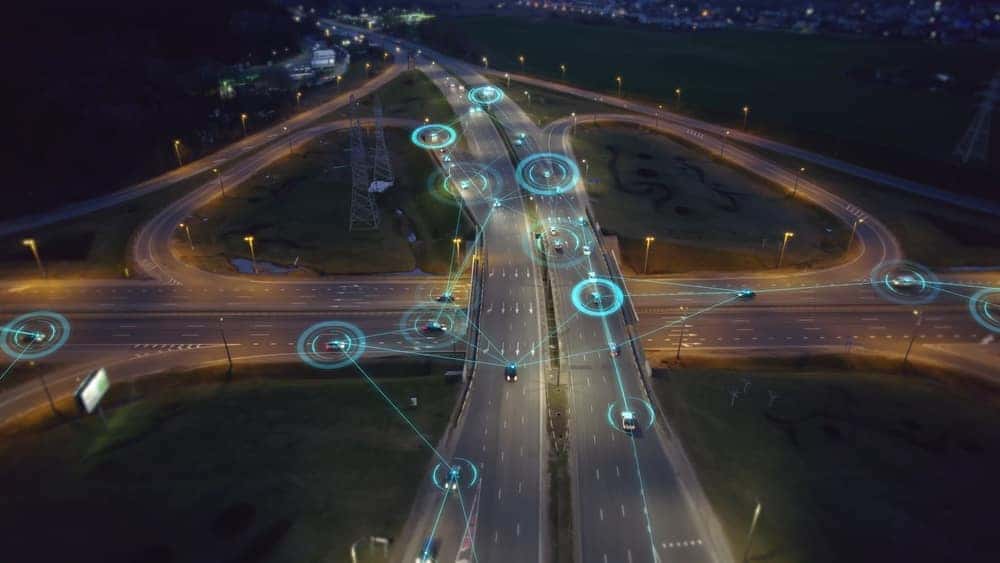
Autonomous vehicles are gaining traction in specific regions of the United States, particularly in major urban centers where testing and deployment are more common. Notable examples include:
- San Francisco
Home to Waymo and Cruise, offering robotaxi services.
- Phoenix
Waymo operates a well-established autonomous ride-hailing service.
- Los Angeles
Recently expanded operations for autonomous rides across a large area.
- Austin
Testing fully autonomous rides with plans for public service.
Autonomous vehicles are increasingly used in controlled environments like university campuses and industrial settings, as well as for last-mile delivery services.
The Role of Super Cruise Technology
General Motors’ Super Cruise technology is a significant advancement in semi-autonomous driving. As features like this become more prevalent, they help build the public’s trust in the future of self-driving cars. While autonomous vehicles have yet to dominate Springfield roads, this technology helps pave the way for broader adoption.
Used Vehicles for Sale in Springfield, MO
We have many quality used vehicles for sale on our lot in southeast Springfield. Contact us or call (417) 763-6811 to schedule a test drive with our team. We’re happy to help in any way we can!
0 comment(s) so far on 7 of the Top Advanced Safety Features in Used Vehicles