


Transmission & Transmission Fluid FAQs
Thompson Sales wants you to get the most out of your vehicle. As such, we provide car maintenance and repair tips for you as you get many years of service from your car, truck, or SUV.
We answer several frequently asked questions about your vehicle’s transmission and transmission fluid as part of common types of car maintenance.
What is the transmission in my vehicle?
Your vehicle’s transmission converts power from the engine to the wheels.
What is the difference between an automatic and manual transmission?
A vehicle’s computer handles shifts between gears in an automatic transmission, while a manual transmission relies on the driver using the clutch pedal and the gear shift to change gears, depending on the speed and driving conditions.
How many new cars still have manual transmissions?
For 2022 models, you can purchase 32 different models with manual transmissions, including the Cadillac CT4-V Blackwing and CT5-V Blackwing.

How does my vehicle’s transmission work?
An automatic transmission uses fluid levels in a device called a torque converter to change gears based on the speed of the car. As the speed increases or decreases, fluid pressure changes to indicate to the converter that it’s time to change gears.
A manual transmission combines a clutch pedal and a gearshift for the driver to use. As the car accelerates or decelerates, the driver shifts gears upward or downward, respectively. The driver pushes the clutch pedal, then moves the gearshift to the desired gear, and then eases off of the clutch pedal.
In the engine, the transmission uses a flywheel and pressure plate to engage and disengage the engine from the transmission. When a driver pushes the clutch, the pressure plate disengages the transmission. Then the flywheel, connected to the gearshift, changes gears while the car is moving but the engine doesn’t receive power.

What are the parts of my vehicle’s transmission?
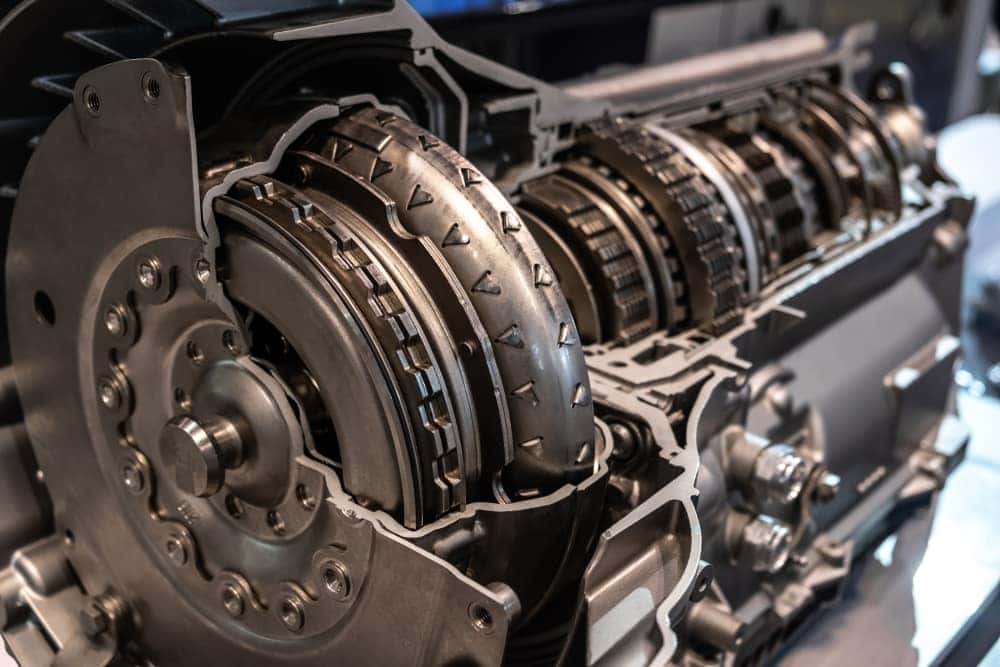
The transmission is one of the most complex pieces of your vehicle. It consists of several major parts, each of which contain other parts to make the assembly work:
- Torque converter
- Planetary gearset
- Pump
- Clutches
- Bands
- Sensors
- Valve body
- Transmission fluid
The torque converter connects the engine to the transmission. It uses hydraulic fluid to control how much torque (or twisting force) the transmission needs to operate the vehicle at a certain speed.
A planetary gearset is so named because when you look at it, the part resembles a two-dimensional drawing of the solar system. The outermost gear, the ring gear, connects to inner planetary gears with the sun gear in the center. The planetary gears revolve around the sun gear in the center. When the engine’s computer determines what gear ratio (or the efficiency of the gears) it needs, the rotational force of these gears turns the output shaft to propel the wheels forward.
The pump sits between the torque converter and planetary gear set. This part pressurizes transmission fluid in order to lubricate the entire transmission properly. Without the right pressure of transmission fluid, gears will not shift correctly and cause problems.
Clutches and bands help your automatic transmission shift gears when it allows them to rotate, engage, or disengage. Bands wrap around the gear train and either tighten or loosen. Tightening engages a certain gear, while loosening disengages a gear. Pressurized fluid causes the pistons to engage with the transmission, and then power goes to the wheels to move the vehicle forward or backward.
Sensors in the transmission control the gear shift while calculating the speed of the engine and wheels to determine what gear your car should use.
Why does my vehicle need transmission fluid?
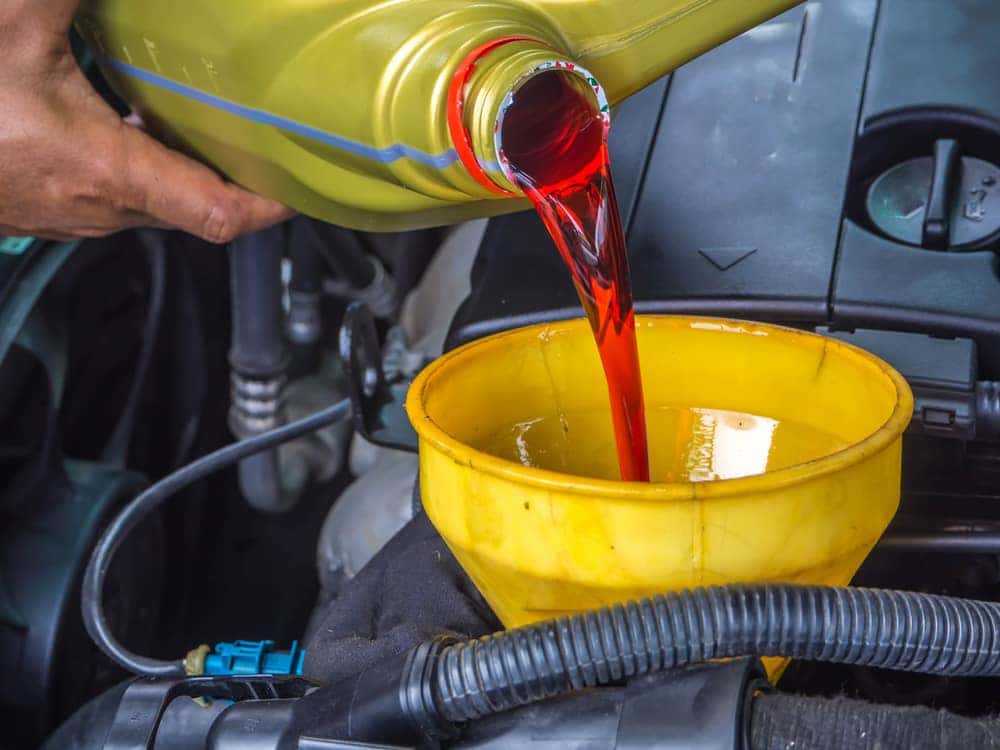
Transmission fluid is absolutely vital to the operation of this engine part. Think of this as something similar to hydraulic fluid, which is pressurized to make certain parts of heavy equipment move properly.
What does transmission fluid do?
Transmission fluid keeps the part cool while making sure the gears move properly with the right lubrication.
How often should I check my vehicle’s transmission fluid?
Check the transmission fluid once per month.
How do I check my vehicle’s transmission fluid?
Follow these steps:
- Park your vehicle on a level surface.
- Engage the parking (emergency) brake.
- Start the engine.
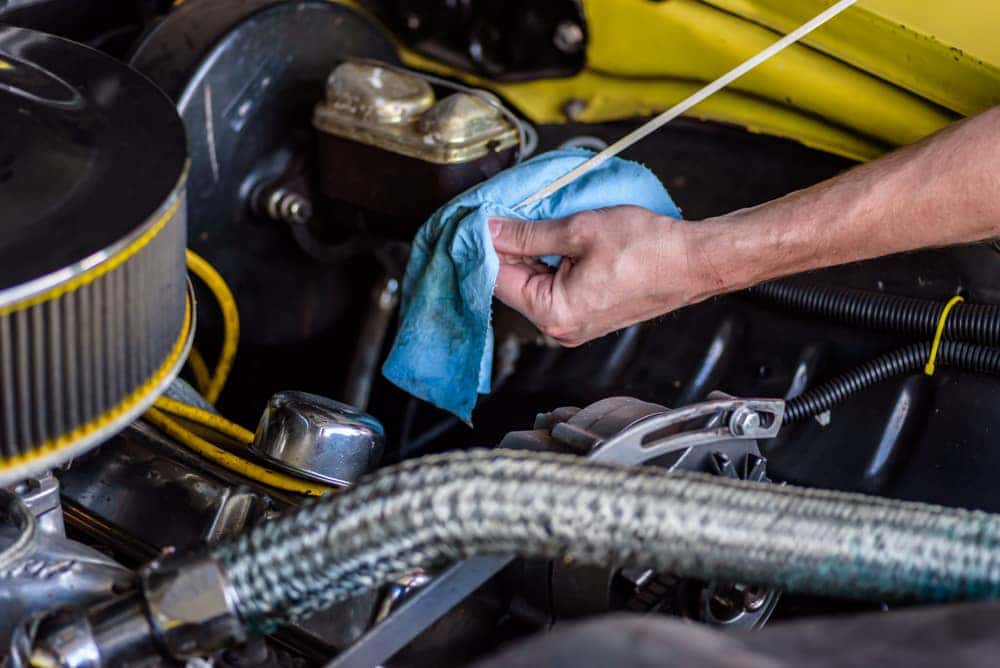
- Locate the transmission fluid dipstick somewhere in the engine compartment. Your vehicle’s owner manual should show you where it’s located. Manufacturers often differentiate it from the oil dipstick by making it a different color.
- Remove the dipstick.
- Wipe it clean with a cloth or paper towel. Be careful because the transmission fluid may be hot.
- Reinsert the dipstick fully.
- Remove it again.
- Look at the color of the fluid and the level. Your dipstick should have two markings on it. One for full when warm and full when cold.
- Reinsert the dipstick, and you’re done.
Can I add transmission fluid to my vehicle?
Yes, to get the fluid level up to operational norms. Your vehicle should not lose automatic transmission fluid during normal operation. If you see fluid levels that are too low, we highly recommend getting service for your vehicle.
How often should I change my vehicle’s transmission fluid?
First, look at the owner’s manual. It will tell you how often to change the transmission fluid. If not, change it every 30,000 to 50,000 miles, or possibly up to every 100,000 miles on modern vehicles.
Why is changing my transmission fluid important?
Unchanged fluid can cause your transmission to break.
What color should transmission fluid be?
Clean transmission fluid that is brand-new is clear red or pink in color, and it’s translucent, meaning light can pass through it.
As the fluid ages, it turns a deep red or brown color, and it’s time to change it. You can see these changes over time as you check the transmission fluid every month.
How can I tell if I need to change my vehicle’s transmission fluid?
Signs you need to change your car’s transmission fluid include:
- Dirty transmission fluid that is a deep red or brown color.
- You have driven more miles since your last transmission fluid change than recommended in your owner’s manual.
- Engine revving when going around corners.
- Roaring, whining, or buzzing sounds when you accelerate or go around corners.
- Drops of fluid under your car. These generally come from motor oil, radiator fluid/coolant, or transmission fluid. Check all three components to determine which one it is.
- Difficulty shifting in an automatic or manual transmission.
- Chattering noise when you start driving, which can indicate a problem with the transmission, suspension, or steering.
- A slight burning smell, which could also be burning oil.
- The warning light comes on, especially in newer cars. Advanced sensors can tell when the transmission fluid gets too high, and some vehicles have a special warning light just for transmissions. Otherwise, if the Check Engine light comes on, it might be for a transmission problem.
In any of these instances, it’s a good idea to have your vehicle checked for potential problems at your local certified service center.

What tools do I need to change my transmission fluid?
You will need:
- Carjack or rolling cart to lay on your back
- Paper towels or shop towels
- Gloves
- Safety glasses
- Socket set
- Drain pan
- Funnel
- Transmission fluid
- Transmission gasket
- Flat, level surface to park your vehicle
- A well-ventilated area
- Receptacle to put the used transmission fluid in.
How do I change my car’s transmission fluid?
You can change the transmission fluid in your car, following several steps.
- Lift the car, if necessary.
- Pop the hood.
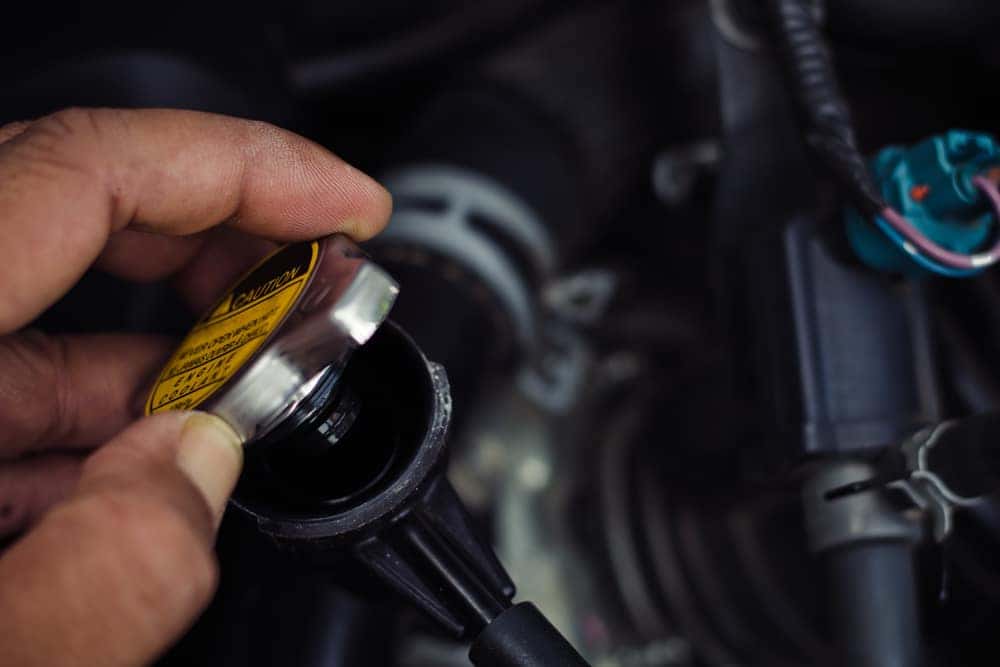
- Remove the transmission fluid cap.
- Place a drain pan underneath the transmission fluid pan.
- Remove the transmission pan’s bolt using your socket wrench.
- Let the fluid drain completely out of the transmission.
- Install a new transmission gasket.
- Reinstall the pan by using the bolts.
- Pour the correct amount of transmission fluid into the part using your funnel.
- Remove the funnel.
- Put the cap back on!
This process usually takes around 30 minutes.
How much does changing transmission fluid cost?
Anywhere from $80 to $250, depending on the make and model of car and the service center where you take your vehicle. The average cost is around $100.
How expensive is it to fix a broken transmission?
Average repairs range from $300 to $1,400, while replacements may range from $1,800 to $3,400. These figures make transmission problems some of the most expensive auto repairs to have.
Where can I get my transmission serviced in Springfield, Missouri?
The certified service center at Thompson Sales in Springfield, Missouri, can service your transmission.
Where can I get my transmission fluid replaced in Springfield, Missouri?
The certified technicians at Thompson Sales in Springfield, Missouri, can change your vehicle’s transmission fluid. Contact us or call (417) 763-6811 for more information.
0 comment(s) so far on Transmission & Transmission Fluid FAQs