


Types of Car Maintenance & Essential Maintenance Tips for Drivers in Springfield, Missouri
Did you know the average American keeps their car between 8 and 12 years? A report from Reuters says the average time of car ownership is 12.6 years, while The Zebra’s survey says the average length of car ownership is eight years.
Either way, regular maintenance is the key to the longevity of your vehicle. From tire rotations and oil changes to transmission fluid replacement and a new battery, keeping your vehicle’s engine in top shape can make your vehicle last for 12 years and 200,000 miles.
Our complete guide to car maintenance in Springfield, MO, covers what you need to know about 25 different types of vehicle maintenance our staff can do. Did you know that Thompson has four GM World-Class Technicians (WCTs) on staff? That means they are at the top of their game when it comes to repairing GM vehicles.
Table of Contents
- Multi-Point Inspection
- Full Synthetic Oil Change in Springfield, MO
- Tire Rotation & Treadwear Check
- Engine & Cabin Air Filter Change
- Coolant Level Checks
- Tune-Ups
- Transmission Fluid Flush & Fill
- Serpentine Belt Inspection & Replacement
- Timing Belt Inspection & Replacement
- Spark Plug Replacement
- Windshield Wiper Blade Inspection & Replacement
- Car Battery Inspection & Replacement
- Electrical System & Wiring Check
- Brake Fluid Check & Replacement
- Brake Inspection & Replacement
- Maintaining Differential Fluid
- Servicing the Transfer Case in 4WD and AWD Vehicles
- Checking & Replacing PCV Valves
- Inspecting the Exhaust System
- Fuel Filter Replacement
- Oxygen Sensor Check
- Lights & Mirrors Inspection & Replacement
- Suspension Components Check
- Steering Components Check
- Thompson Sales Delivers the Best Car Maintenance in Springfield, MO
Multi-Point Inspection
During every service appointment for your vehicle, we’ll perform a multi-point inspection of key systems and components as part of regular car maintenance in Springfield, MO.
The purpose of a multi-point inspection is to keep a close eye on your vehicle’s parts for wear. Our staff will tell you when something needs to be replaced with enough time for you to budget for it. For example, tires typically last around 50,000 miles under normal wear and tear. As the tire treads wear over time, we can gauge when you’ll need a new set. You’ll want to replace the tires before they get too worn.
A multi-point inspection is vital to catching upcoming maintenance before it becomes a major issue. You’ll want to replace key parts before they completely wear out.
The items we’ll look at during a multi-point inspection include:
- Engine and Transmission: Inspect for leaks, performance issues, and fluid levels.
- Brakes: Check brake pads, rotors, and fluid levels.
- Suspension and Steering: Assess shocks, struts, and steering components for wear.
- Tires: Check tread depth, pressure, and alignment.
- Battery and Electrical: Test battery health and inspect the charging system.
- Fluids: Check and top off engine oil, coolant, brake fluid, transmission fluid, and windshield washer fluid.
- Exhaust System: Inspect for leaks and proper function.
- Safety Features: Verify the operation of lights, wipers, horn, and seatbelts.

Full Synthetic Oil Change in Springfield, MO
Most modern vehicles require full synthetic oil, especially ones with turbocharged parts. Full synthetic oil offers better protection for engine parts because it has fewer impurities and more cleansers and additives. We will install the right oil for your gasoline-powered vehicle with an oil change in Springfield, MO.
Your engine will have superior lubrication from full synthetic oil, reducing friction and wear on engine components, which can extend the engine’s lifespan. It also has a higher resistance to breakdown under extreme temperatures, ensuring consistent performance in both hot and cold conditions. Additionally, synthetic oil is more effective at keeping the engine clean, preventing sludge buildup that can impair efficiency.
How often should I change my car’s oil?
For most modern cars, an oil change happens every six months or 7,500 miles, whichever comes first. If you’re driving an older vehicle that still uses conventional oil, aim for an oil change every 3,000 miles or three months to keep everything in top shape.
When can I bring my car in for an oil change in Springfield, MO?
Our Quick Lube is open from 7:30 a.m. to 6 p.m. M-F and 8 a.m. to 4 p.m. on Saturdays. We take customers on a first-come, first-served basis. Our technicians will have you back on the road in no time!

Tire Rotation & Treadwear Check
During every regular service visit for car maintenance in Springfield, MO, we will rotate the tires and check on the treadwear depth. Again, we recommend a tire rotation every 7,500 miles or six months.
What happens during a tire rotation?
We will move the front tires to the rear, and the rear tires to the front, often in a specific pattern depending on your vehicle type and whether you have two-wheel or all-wheel drive. This helps ensure even tire wear, which extends the life of the tires, improves fuel efficiency, and enhances overall vehicle handling and traction on the road. If you go off-roading or drive a lot, you might need a tire rotation more often than six months.
Suppose you can extend the life of your tires. When you consider that a single new tire can cost around $100, and a full set may cost $300 to $400, you can save a pile of cash on the life of your tires.
Why do we check the tread wear depth?
While we’re rotating the tires, we’ll check the tread wear depth. If a tire reaches 2/32 of an inch, you need new tires. As we see more wear on the tire treads, we’ll let you know if your tires are close to needing a replacement.
We recommend checking the tread wear depth of your tires once a month in between tire rotations.

Engine & Cabin Air Filter Change
Your vehicle has two essential air filters: the engine air filter and the cabin air filter. The engine air filter keeps dirt and debris out of the engine so the combustion chambers work properly. Meanwhile, the cabin air filter keeps the air inside your vehicle clean, filtering out dust, pollen, and other irritants so you and your passengers can breathe easier. Both filters play crucial roles in keeping your vehicle running smoothly and ensuring a comfortable driving experience.
How often should I change my car’s air filters?
We recommend changing these air filters every 15,000 miles or one year. That’s every other service appointment. If you drive in dusty conditions, consider changing them more often as part of regular car maintenance in Springfield, MO.
Coolant Level Checks
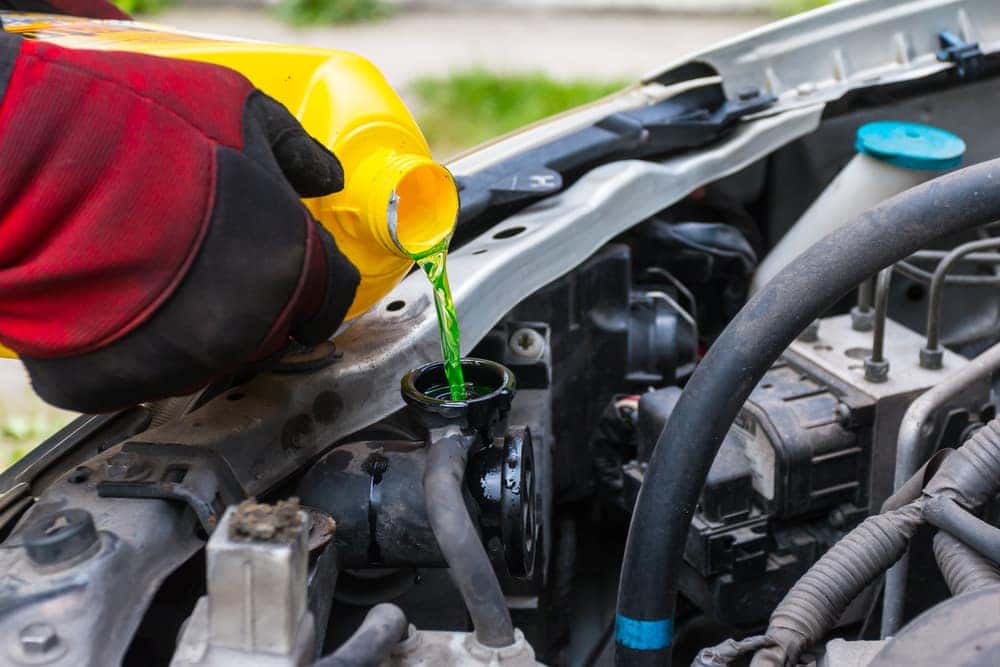
Engine coolant or antifreeze keeps your engine cooler in the summer and prevents it from freezing in the winter. It’s a green or orange color. It’s vital for warm summers because an overheated engine can cause permanent damage.
How often should I check my engine coolant level?
We recommend checking coolant levels once a month. Try looking at it once a week during hot weather. When your car is cool, pop the hood and locate the coolant reservoir. Check the level markings on the side, labeled “low” and “full.” If the coolant is at the “low” mark, simply top it off until it reaches “full.”
When will my vehicle need a radiator flush and fill?
Modern vehicles usually need a radiator flush and fill every 40,000 to 50,000 miles as the coolant ages. Refreshing the coolant and cleaning the radiator can prevent rust and corrosion. Check your owner’s manual to determine when you need this vital car maintenance in Springfield, MO.

Tune-Ups
Think of a car tune-up as a comprehensive look at all of your vehicle’s systems. While modern vehicles don’t require tune-ups as frequently as older models, the process remains essential for keeping your engine in optimal condition. A tune-up involves a series of checks, adjustments, and replacements of various components in the engine and related systems. It’s a vital yet often overlooked car maintenance in Springfield, MO.
The Basics of a Car Tune-Up
At its core, a tune-up brings your car’s engine back to its peak performance. It’s an opportunity to check the health of key components and address any issues that could lead to reduced fuel efficiency, poor performance, or even engine failure. Tune-ups can vary based on the age, make, and model of the vehicle, but the goal is always the same.
Key Components Checked During a Car Tune-Up
- Spark Plugs: Spark plugs are critical to your engine’s ability to ignite the air-fuel mixture in the cylinders. Over time, spark plugs can wear out, causing misfires, rough idling, and reduced fuel efficiency. If we see the spark plugs wearing out, we’ll replace them.
- Ignition System: The ignition system, including spark plug wires, ignition coils, and the distributor, is checked for signs of wear and corrosion. Faulty components in the ignition system can lead to hard starts, engine misfires, and other performance issues.
- Fuel System: The fuel system, including the fuel filter and fuel injectors, is inspected. A clogged fuel filter can restrict the flow of fuel to the engine, causing poor performance and potentially damaging the fuel pump and fuel injectors, leading to worse fuel efficiency and misfiring pistons.
- PCV Valve: The positive crankcase ventilation (PCV) valve helps reduce emissions by routing unburned fuel and gasses back into the engine for combustion. If the PCV valve is clogged or faulty, it can cause rough idling, poor fuel economy, and increased emissions.
- Timing and Idle: The engine’s timing and idle speed are checked and adjusted if necessary. Proper timing ensures that the engine’s valves open and close at the right times, allowing for efficient combustion while preventing rough idling or stalling.
- Belts and Hoses: Belts and hoses are inspected for signs of wear, cracking, or leaks. The engine timing belt, in particular, is a crucial component that synchronizes the movement of the engine’s valves and pistons. You don’t want a worn timing belt to break because it could lead to a very expensive engine repair. Hoses are checked for leaks or blockages that could lead to overheating or loss of power.
- Battery and Charging System: The battery and charging system are tested to ensure they’re providing adequate power. A weak battery or faulty alternator can lead to hard starts, dim lights, and other electrical issues.
- Exhaust System: The exhaust system is inspected for leaks, damage, or excessive emissions. A faulty exhaust system can lead to increased noise, reduced performance, and higher emissions.
The Importance of Regular Car Tune-Ups
Regular tune-ups are essential for maintaining your vehicle’s performance, fuel efficiency, and longevity. By addressing small issues before they become major problems, tune-ups can save you money on costly repairs and extend the life of your engine. Additionally, a well-tuned engine produces fewer emissions, making it better for the environment.
When to Get a Car Tune-Up
The frequency of tune-ups depends on your vehicle’s make, model, and age, as well as your driving habits. Generally, it’s recommended to have a tune-up every 30,000 to 50,000 miles. However, bring your vehicle to Thompson Sales’ service center if you notice any of these issues.
Decreased Fuel Efficiency: If you’re filling up more often than usual, it could be a sign that your engine isn’t running as efficiently as it should.
Rough Idling or Stalling: If your car is idling roughly, stalling, or having difficulty starting, it may be time for a tune-up.
Engine Misfires: Misfires, where the engine skips or stutters, can indicate a problem with the spark plugs or ignition system.
Unusual Noises: Knocking, pinging, or other unusual engine noises can signal timing issues or other problems that need to be addressed during a tune-up.
Warning Lights: If the check engine light or other warning lights come on, it’s a good idea to have your vehicle checked by a professional.
Transmission Fluid Flush & Fill
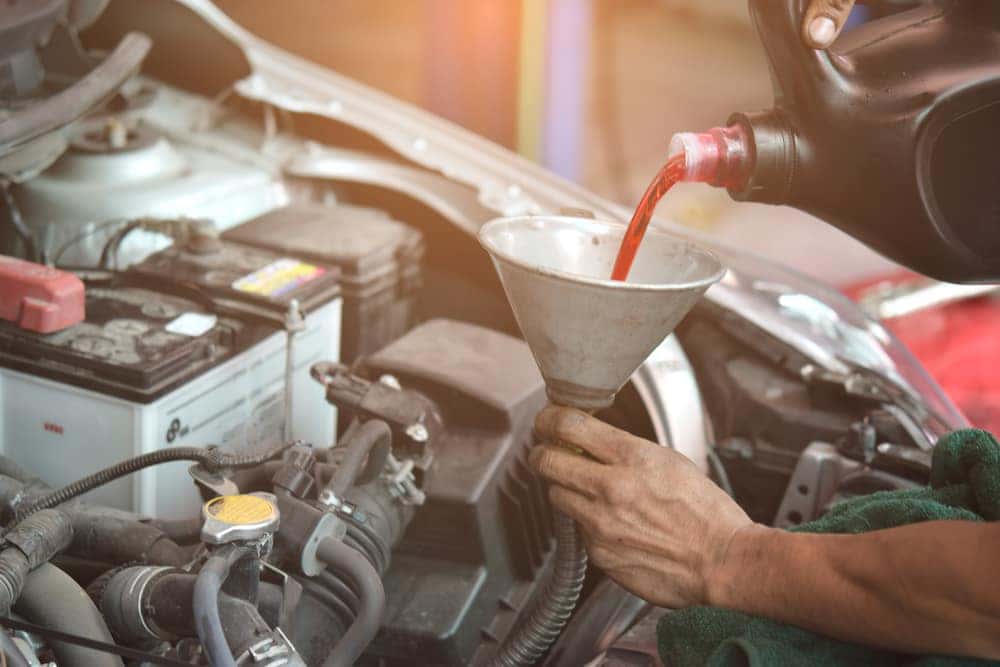
Your vehicle’s transmission is one of the most complex parts of the engine. It requires a red hydraulic fluid, called transmission fluid, to keep the gears moving smoothly and prevent damage. You’ll need to change the transmission fluid regularly to keep this part of your engine running properly.
Over time, transmission fluid can degrade due to heat, friction, and contamination from metal particles and other debris. When the fluid becomes old or contaminated, it loses its effectiveness, which can lead to a variety of transmission issues.
How often does my vehicle need a transmission fluid change?
We recommend a transmission fluid change every 30,000 to 50,000 miles. Always check your owner’s manual to see the interval for this car maintenance in Springfield, MO. Some new vehicles may not need a transmission fluid change for 100,000 miles.
Signs Your Transmission Needs New Fluid
If you notice these signs, consider getting new transmission fluid.
- A burning smell is often a sign that the fluid is old and has lost its ability to lubricate and cool effectively. This can lead to overheating and potential damage to the transmission.
- Dirty or discolored transmission fluid is likely contaminated and needs to be replaced. Normal transmission fluid should be a translucent red color.
- Slipping gears could be due to low or degraded transmission fluid. Slipping gears can be dangerous and should be addressed immediately.
- Delayed gear engagement means there’s a delay between shifting gears and the actual engagement of the transmission. It’s often a sign that the fluid is low or has lost its viscosity.
Unusual noises, such as grinding or whining, coming from the transmission may indicate a lack of proper lubrication due to old or insufficient fluid.
Serpentine Belt Inspection & Replacement
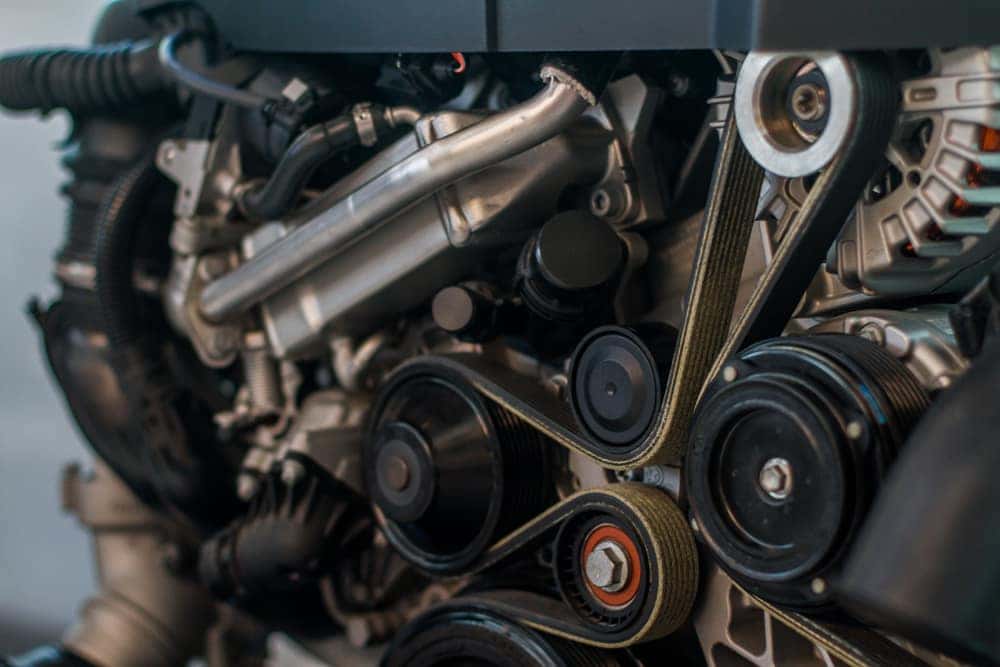
The serpentine belt powers multiple items on your vehicle. Made from durable rubber, it winds through pulleys to run the alternator, power steering pump, water pump, air conditioning compressor, and sometimes the cooling fan. For example, the alternator generates electricity to charge the battery and power electrical systems, while the water pump circulates coolant to prevent engine overheating. The power steering pump enables easier steering, and the air conditioning compressor drives the AC system.
How Long Does a Serpentine Belt Last?
Most serpentine belts have a lifespan of 60,000 to 100,000 miles. We recommend looking for signs of wear, such as cracks or fraying, every three months. A worn or damaged serpentine belt can lead to serious engine problems. If the belt breaks, the vehicle could lose power steering, overheat, or experience electrical failures. You don’t want this to happen during your summer vacation!
Signs Your Vehicle Has a Serpentine Belt
If you notice any of these signs, bring your vehicle to Thompson Sales for car maintenance in Springfield, MO, as soon as possible.
Loss of Power Steering: The steering wheel becomes very hard to turn because the power steering pump is no longer functioning.
Engine Overheating: The water pump stops working, leading to a rapid increase in engine temperature.
Battery Warning Light: The alternator isn’t charging the battery, causing the battery warning light to illuminate.
Air Conditioning Failure: The AC compressor ceases to operate, resulting in a loss of cool air.
Timing Belt Inspection & Replacement
The timing belt ensures that the engine’s valves open and close in precise synchronization with the pistons, which produces the power to move the wheels forward. This part is a toothed belt made of high-quality rubber with fiber reinforcements. It could also be a chain that is sturdier than the belt. It connects the engine’s crankshaft to the camshaft(s), synchronizing the rotation of these components to open and close valves while moving the pistons up and down. The timing belt ensures efficient combustion and prevents damaged pistons.
When Does My Vehicle Need a New Timing Belt?
We recommend replacing the timing belt between 60,000 and 100,000 miles, depending on the vehicle. Failure to replace the timing belt on time can result in its failure, which can lead to catastrophic engine damage and costly repairs. Our service team will replace the timing belt in a timely manner, well before it reaches the breaking point.
Because of its location and complexity, we recommend a professional mechanic replace the timing belt of your vehicle.
Spark Plug Replacement
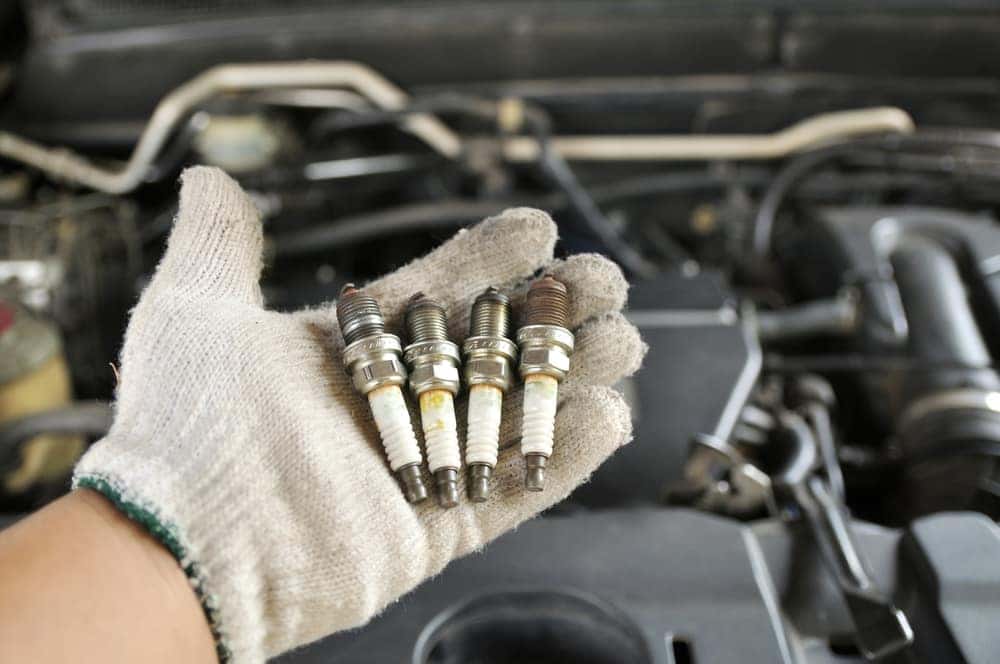
Spark plugs ignite the air-fuel mixture within the combustion chambers of gasoline-powered engines. The tiny explosion of the gasoline, ignited by the spark, moves the engine’s pistons and ultimately powers your car, truck, or SUV. The performance of spark plugs directly impacts the efficiency, power, and smooth operation of the engine.
Why Does My Vehicle Need New Spark Plugs?
Over time, spark plugs wear out due to constant exposure to high temperatures and pressure inside the engine. They can also develop carbon deposits from the combustion chamber over time. Worn or dirty spark plugs can cause misfires, reduced fuel efficiency, rough idling, and difficulty starting the engine. Replacing them prevents these problems.
Watch for these signs you need new spark plugs:
- Engine misfires
- Rough idling
- Difficulty starting the engine
- Decreased fuel efficiency
- Check Engine light comes on and stays on
How Often Should I Replace the Spark Plugs?
Depending on your vehicle, we recommend replacing spark plugs every 30,000 to 100,000 miles. Check your owner’s manual for details!
Windshield Wiper Blade Inspection & Replacement
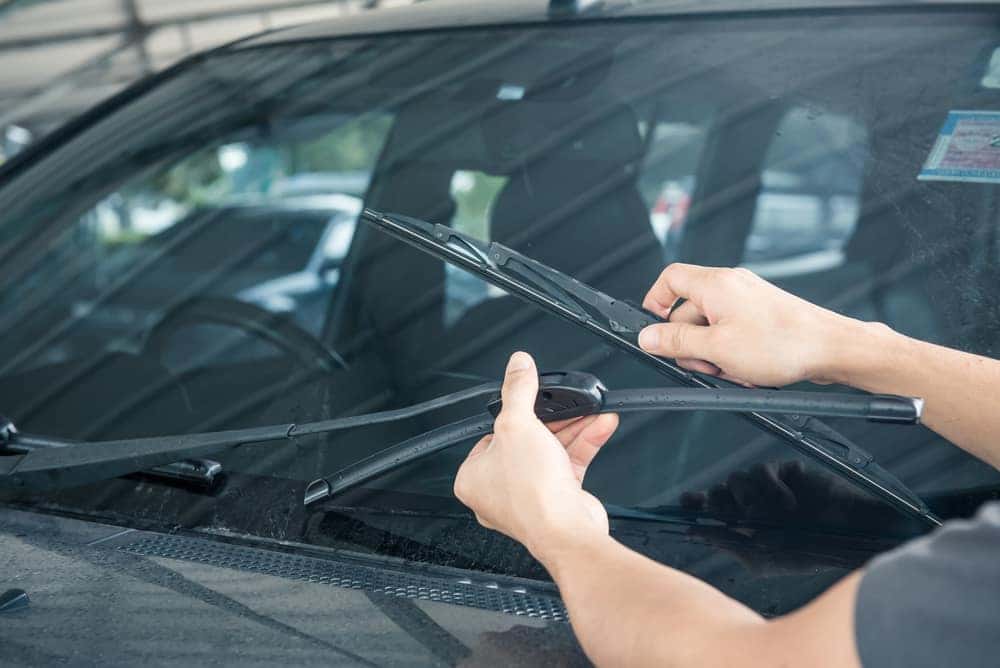
Do your windshield wipers leave streaks of water on the windshield? How about that annoying screeching sound when they rub against the glass? These are both signs it’s time for new windshield wiper blades. You should check them at least once every six months yourself to look for signs of cracking. Definitely check on them before the spring and fall, when we get the most rain in Southwest Missouri.
We recommend new wiper blades every six months to a year, depending on the condition they’re in. We’ll inspect the windshield wiper blades during every service visit as part of the multi-point inspection.
Windshield wipers are vitally important to visibility in adverse weather conditions, including snow. So, we recommend new ones to keep you and your family safe on every drive. New windshield wiper blades move water away from the windshield, reduce noise and vibrations, and improve your vision in inclement weather.
Car Battery Inspection & Replacement
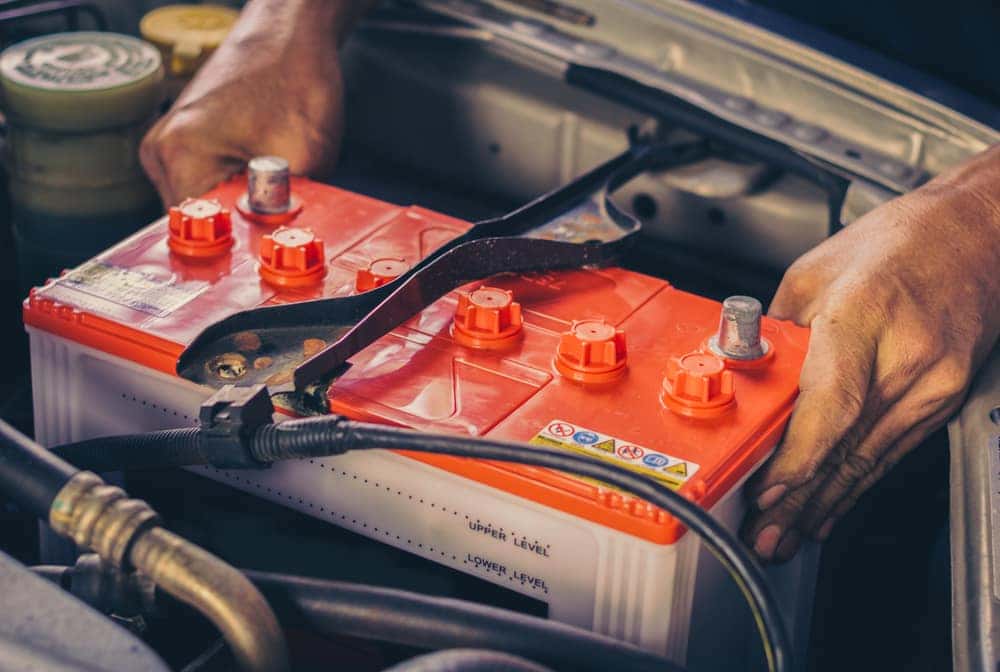
Even electric vehicles have a 12-volt battery that powers a vehicle’s accessories like air conditioning, radio, infotainment screen, power windows, and power locks. These batteries wear out eventually, usually every three to five years. We’ll inspect and test the battery during every regular maintenance visit at Thompson Sales. If we see the battery power beginning to diminish, we’ll suggest a replacement to give you plenty of time to budget for this car maintenance in Springfield, MO.
We maintain many types of batteries in stock at our parts department. If you prefer a specific brand, we can have it ready to install at our service center. If you replace the battery yourself, you’ll have to reset the clock and perhaps reboot the infotainment screen.
Electrical System & Wiring Check
Our service technicians can perform a thorough electrical system and wiring check for your vehicle. An electrical system and wiring check is a comprehensive inspection to ensure that a vehicle’s electrical components are functioning correctly. If we find anything amiss that needs to be replaced or repaired, we’ll tell you.
These are the points we’ll look at:
1. Battery Inspection
We’ll test the battery’s voltage, checking for corrosion on the terminals and ensuring that it is securely mounted.
2. Alternator Testing
The alternator is responsible for charging the battery and powering electrical systems while the engine runs. During the check, the mechanic tests the alternator’s output to ensure it is generating the correct voltage. If the alternator is failing, it can lead to a drained battery and malfunctioning electrical systems.
3. Starter Motor Check
The starter motor is what helps the engine turn over after you hit the ignition button or turn the key. Our service technician will listen for unusual sounds during engine start-up and may perform a voltage drop test to assess the starter’s efficiency.
4. Wiring and Connections
We’ll look at your vehicle’s wiring harness for any signs of wear, damage, or corrosion. This involves checking the connections between the battery, alternator, starter, and other electrical components. Damaged or corroded wires can cause electrical shorts, leading to system failures or even fires.
5. Fuse Box and Relays
We’ll examine the fuse box and relays, which protect the electrical circuits. Service technicians will check for blown fuses, faulty relays, and signs of overheating. Replacing any damaged fuses or relays ensures that the electrical circuits are protected from overloads.
6. Lighting System
All exterior and interior lights are tested, including headlights, taillights, brake lights, turn signals, and dashboard lights. We will see if there are burned-out bulbs, malfunctioning switches, and any issues with the wiring that could cause lights to dim or flicker.
7. Electronic Control Modules (ECMs)
Modern vehicles are equipped with various control modules that manage different systems, such as the engine, transmission, and brakes. Our highly trained service technicians use diagnostic tools to check for error codes that indicate issues with these modules. If we detect any faults, we can repair them.
8. Testing Electrical Accessories
We will also test all electrical accessories, such as power windows, locks, mirrors, and the audio system, to ensure they are working properly. Any malfunctioning accessories can indicate a problem with the wiring or control modules.
9. Grounding Check
The vehicle’s electrical system relies on proper grounding to function correctly. Our service technicians will examine the ground connections throughout the vehicle, ensuring they are secure and free from corrosion. Poor grounding can cause various electrical issues, from dim lights to malfunctioning sensors.
10. Voltage Drop Testing
Voltage drop testing happens across various components and circuits to identify any excessive resistance in the wiring. High resistance can cause components to receive less power than needed, leading to poor performance or failure. This test helps pinpoint issues that may not be visible during a visual inspection.
11. Battery Charging System Test
The entire battery charging system is tested to ensure the battery is charging correctly while the engine is running. We will confirm that the alternator, voltage regulator, and wiring are all functioning together to maintain the battery’s charge.
12. Inspection of Sensors and Switches
Inspecting sensors and switches that regulate the vehicle’s safety and convenience systems, such as airbag sensors, ABS sensors, and temperature sensors, can help keep your family safe.
Brake Fluid Check & Replacement
Another vital car maintenance in Springfield, MO, is checking the brake fluid every 15,000 miles. Brake fluid is a specialized hydraulic fluid that transfers force from the brake pedal to the brake components at each wheel. When you press the brake pedal, the brake fluid moves through the brake lines to the brake calipers or wheel cylinders, causing them to apply pressure to the brake pads or shoes. This pressure creates friction with the brake rotors or drums, slowing down or stopping your car, truck, or SUV.
Brake fluid also protects against corrosion and moisture build-up. Over time, brake fluid typically gets dirty and may develop air bubbles in it. When it reaches these points, brake fluid must be replaced.
How Do I Check the Brake Fluid on My Vehicle?
Check brake fluid regularly, at least once every six months, for signs of dirt or bubbles. You can also check the brake fluid reservoir, usually located near the back of the engine bay. If the fluid is below the “MIN” mark, it’s time to add more brake fluid. However, low brake fluid levels could indicate a leak or other issues, so it’s important to have the system inspected if the fluid level is consistently low.
Brake fluid should be clear or slightly yellowish. If the fluid appears dark or has particles in it, it’s a sign that it’s contaminated and needs to be replaced. Many automotive shops can test the boiling point of the brake fluid to determine if it’s degraded.
We Can Replace Brake Fluid at Thompson Sales
Replacing brake fluid involves draining the old fluid from the brake lines and replacing it with new fluid. We will use a brake bleeder to ensure that all old fluid and air bubbles are removed from the system. Some vehicles may require a specific type of brake fluid, so we’ll make sure to use the right grade of brake fluid for your exact model.
Brake Inspection & Replacement
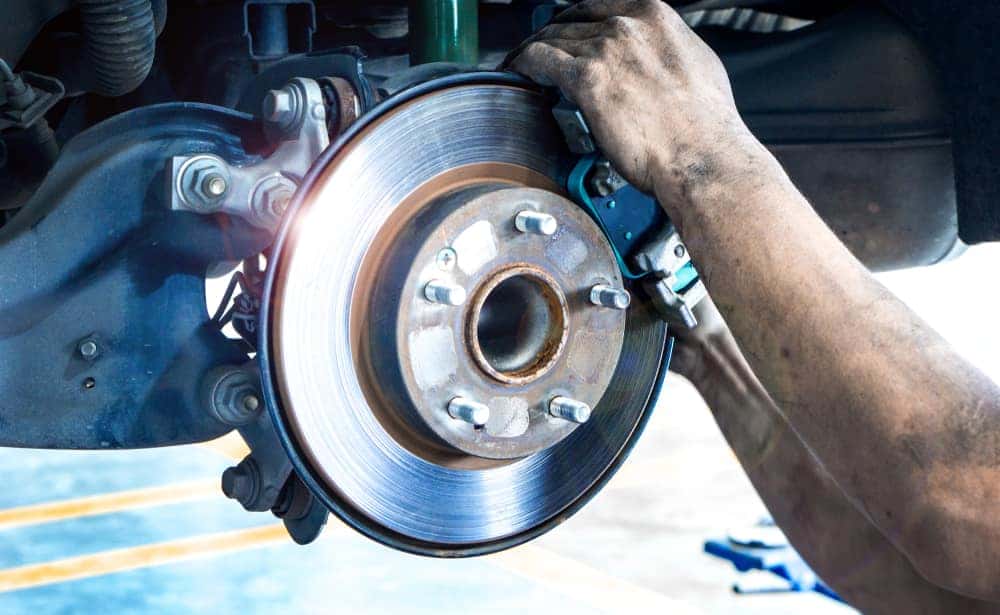
Never take your brakes or brake repair lightly. It’s a type of car maintenance in Springfield, MO, that’s vital to your safety and the safety of other motorists. If you hear your brakes start to grind or squeal regularly, that means the brake pads need to be replaced soon. We recommend making an appointment to get this fixed. In general, when we talk about needing new brakes for your car, truck, or SUV, we mean replacing the brake pads.
Our team will inspect the brakes and brake pads during a tire rotation every 7,500 miles. If we notice any wear, we’ll let you know.
How Long Do Brake Pads Last?
They typically last anywhere from 25,000 to 75,000 miles, with an average of 50,000 miles. Your driving habits, the material of the brake pads, and the brand of brake pads can determine how long they last. Look over our service specials, which could get you a great deal on new brake pads for your vehicle.
Maintaining Differential Fluid
We have a lot of 4WD and AWD vehicles for sale on our lot in Springfield. Differential fluid lubricates vital parts of a vehicle’s drivetrain and allows for smooth and controlled distribution of power to all four wheels for better handling. The differential compensates for the difference in wheel speeds between the inside and outside wheels, especially during turns.
Differential fluid, also known as differential gear oil, is designed to reduce friction and wear between the gears in the differential. It also helps dissipate heat generated by the gears during operation. This fluid is thicker and more robust than regular engine oil, formulated to withstand the high pressures and temperatures encountered during sudden movements.
How Often Should I Change the Differential Fluid in My 4WD or AWD Vehicle?
We recommend changing the differential fluid every 30,000 to 60,000 miles. However, it’s crucial to consult your vehicle’s owner’s manual for specific intervals. If you regularly drive in more severe conditions, such as frequent towing, off-roading, or extreme temperatures, it may be necessary to change the differential fluid more often. Regular maintenance checks and following the manufacturer’s recommendations help ensure the differential remains in good working condition.
Servicing the Transfer Case in 4WD and AWD Vehicles
The transfer case is a component that distributes power between the front and rear axles, enabling all-wheel or four-wheel drive capabilities. Regular maintenance of the transfer case ensures smooth operation and prevents potential issues from arising.
We’ll inspect the transfer case for leaks as well as look at the seals and gaskets. Our team also checks the transfer case fluid with the case’s dipstick to see if it needs to be changed. During a transfer case fluid change, it works similarly to motor oil in that we drain the old fluid, seal the case back up, and then add the correct amount of new transfer case fluid.
How Often Does My Vehicle Need New Transfer Case Fluid?
We recommend new transfer case fluid every 30,000 to 60,000 miles. It depends on your make and model, as well as what the owner’s manual says. If you frequently drive in rugged conditions, you may need to replace the fluid more often. Our service team will keep an eye on it during every regular maintenance appointment you have with us.
Checking & Replacing PCV Valves
Positive crankcase ventilation (PCV) valves are crucial components in a vehicle’s engine ventilation system. They regulate the flow of gasses between the crankcase and the intake manifold, preventing harmful pressure buildup and reducing engine emissions. By recirculating these gasses back into the combustion chamber, PCV valves help improve engine efficiency and reduce the formation of sludge and deposits.
Every so often, a PCV valve could build up sludge or debris. If this happens, a PCV valve can cause your vehicle to become sluggish or lose fuel efficiency. We can check the PCV valves and their hoses for signs of damage during a regular engine inspection.
How Often Does a PCV Valve Need to Be Replaced?
We recommend replacing PCV valves every 20,000 to 30,000 miles. However, some manufacturers recommend new ones every 30,000 to 50,000 miles as part of regular maintenance checks.
Signs you need a new PCV valve include:
- Sluggish engine performance
- Increased oil consumption, lower oil levels, or oil leaks
- Check Engine light is on
- Excessive engine sludge
Inspecting the Exhaust System
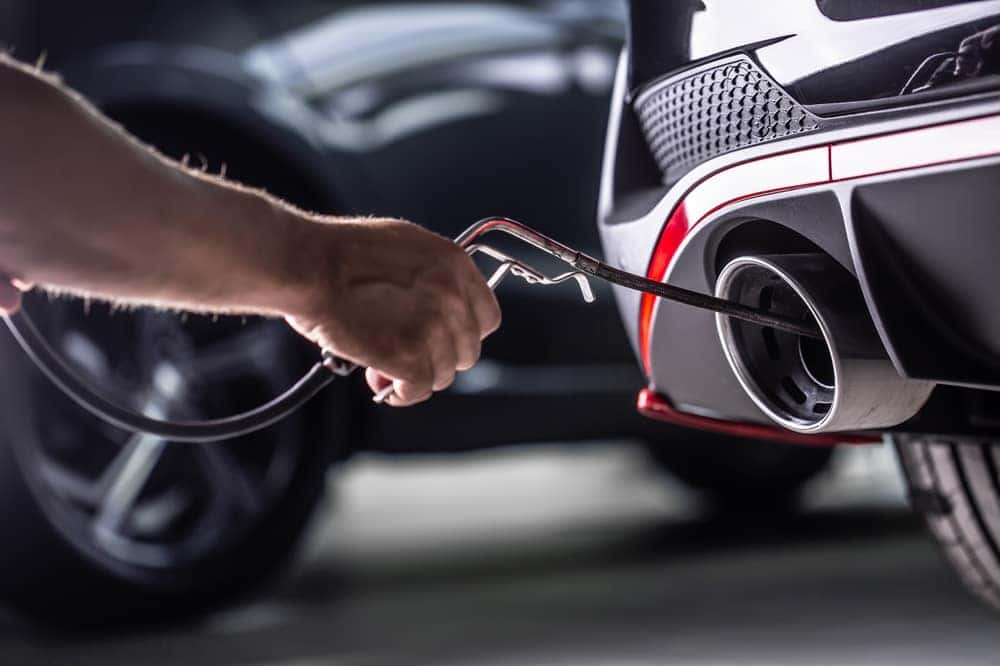
A properly functioning exhaust system keeps carbon monoxide and exhaust from entering the cabin. If there are any malfunctions in your vehicle’s exhaust system or tailpipe, it could cause performance issues with your engine, as well as bad smells and loud noises.
When our service team inspects the exhaust system of a vehicle, we make sure it runs properly with the engine on. Then, we make a visual inspection of the vital parts. Following that, we listen for unusual sounds like hissing or rumbling. We might also use a smoke machine to reveal any leaks in the system. Our service technicians will also look at the mounts to ensure the parts are secured against the car frame and look over the catalytic converter and muffler. If the muffler is malfunctioning, you’ll typically hear loud noises.
If we notice any issues during an exhaust system inspection, we’ll let you know and give you an estimate for repairs.
Fuel Filter Replacement
Your vehicle’s fuel filter removes large particles, dirt, and any rust from the gas tank before it reaches the engine. This protects the combustion chamber from these impurities. You’ll have better fuel efficiency and reduced engine problems with a clean fuel filter. Over time, the fuel filter becomes clogged. We’ll generally replace a fuel filter every 30,000 to 60,000 miles, depending on the make and model of your vehicle. Older cars tend to have shorter lifespans for fuel filters, while newer vehicles have longer fuel filter lifespans.
Oxygen Sensor Check
An oxygen sensor check helps our service team maintain the engine efficiency, emissions control, and fuel economy of your car, truck, or SUV. The oxygen sensor monitors the level of oxygen in the exhaust gasses, helping the car’s computer adjust the air-fuel mixture to get the most out of the combustion chamber. If you notice a drop in fuel efficiency in your vehicle, it might be a problem with the oxygen (O2) sensor.
Our factory-trained technicians will perform a diagnostic test on the oxygen sensor to determine if it’s working properly. If we determine it needs to be replaced, we’ll let you know and quote a price for you.
Lights & Mirrors Inspection & Replacement
Your vehicle’s lights and mirrors are vital to safe driving. We’ll look at all the lights on inside and outside to understand if they’re working correctly. Changing a light is relatively easy for our staff, and we’ll let you know if any need to be replaced. LEDs on newer vehicles can last for 30,000 hours, which is usually longer than the lifespan of the engine itself. So, when we replace a light, it usually means incandescent lights.
If there are any cracks on the mirrors or if the digital rearview camera view isn’t working properly, we’ll make the right replacement. Our parts team will order the correct part for you and install it.
Suspension Components Check
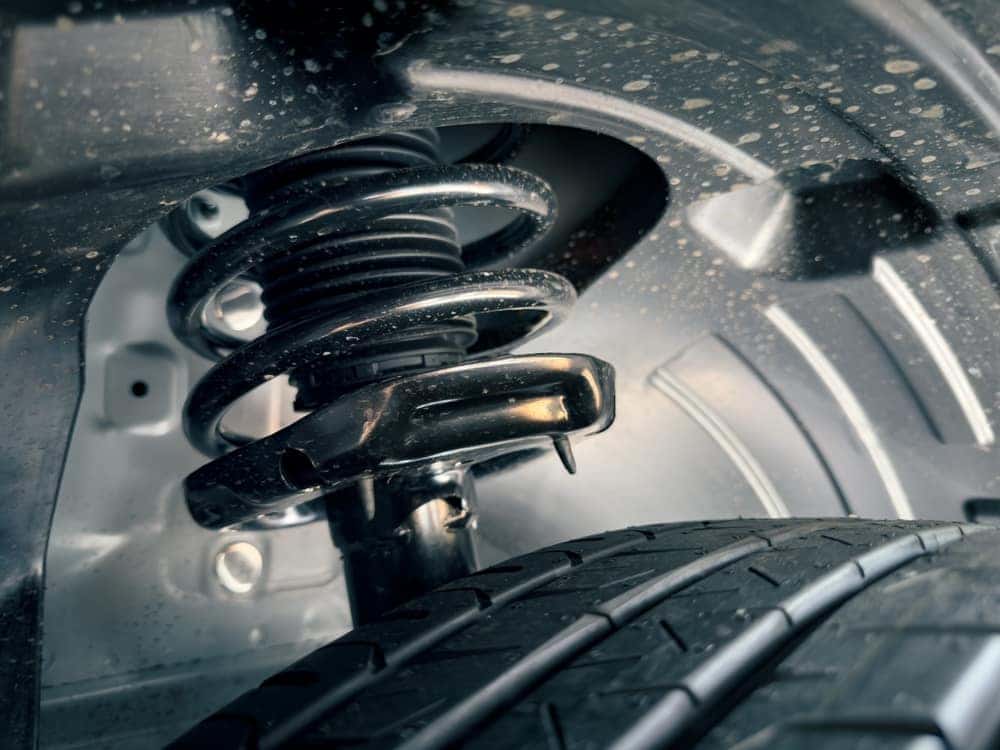
Your vehicle’s suspension helps you and your passengers have a comfortable ride while protecting the wheels and tires from damage. The suspension on all four wheels allows movement in the wheels when you hit bumps or potholes in the road. Heavy-duty springs adjust the wheel up and down based on road conditions, and the parts that hold the spring in place need to be inspected every once in a while.
Our staff will perform a visual inspection of the suspension system on all four wheels when we rotate the tires every 5,000 to 7,500 miles. If we notice any issues with the shocks, struts, rods, or ball bearings, we’ll let you know. These parts all work together to ensure the wheel moves properly when you’re driving. Shocks and struts, which wear out the fastest in the suspension system, usually last between 50,000 and 100,000 miles, so anywhere from four to eight years. If you love off-roading in your vehicle, the shocks and struts may not last as long.
Steering Components Check
Power steering allows you to move the steering wheel more easily. It requires power steering fluid to make sure the mechanism works as it should. If you notice that steering becomes more difficult or you hear noises when you turn your vehicle normally, bring your vehicle in for a check.
Our service technicians will assess and check the components of the steering system to see what could be going on. We will examine the ball joints, steering linkage, tie rods, and how the steering wheel works to see if everything aligns properly.
Thompson Sales Delivers the Best Car Maintenance in Springfield, MO
Is your car, truck, or SUV ready for maintenance? Contact us, call (417) 763-6811, or schedule service with our team. We’ve been serving Springfield for over 105 years!
0 comment(s) so far on Types of Car Maintenance & Essential Maintenance Tips for Drivers in Springfield, Missouri